Expertise provided by Dr. Moshos, Owner
When a patient returns to Rivers Edge Dental after a year or more without a cleaning, our team often finds more gum inflammation than before. Often there are cavities the patient never noticed, and sometimes the appropriate dental cleaning turns out to be a gingivitis cleaning or even a deep cleaning instead of the routine visit they expected. Nobody failed here. The cleaning you need is decided by what your gums and bone look like today, not by what your chart said a year ago.
If you’re the person who schedules everyone else’s appointments, this probably sounds familiar. Everyone else gets seen, and your own cleaning keeps getting pushed back. Then a year and a half has passed, and picking up the phone feels a little awkward. That happens to a lot of people, and our judgment-free, comfort-focused team won’t make you feel bad about the gap. This guide walks through how a cleaning works at our Mooresville office, how we choose the type you need, what it may cost with your plan, and what you’ll feel in the chair, so you can book with confidence.
How Does Rivers Edge Dental Decide Which Cleaning You Need?
At Rivers Edge Dental, three measurable findings decide your cleaning: the amount of buildup, the level of gum inflammation, and whether your X-rays show bone loss. We gather all three before choosing, so the cleaning matches your mouth as it is right now.
The first step is looking at buildup and inflammation. We take X-rays to check for buildup hiding below the gums, because hardened tartar (also called calculus) can sit where no mirror will ever show it. Then your hygienist probes, using a slim measuring tool to record the depth of the small pocket between each tooth and the surrounding gum. Healthy tissue fits snugly around the tooth. Inflamed tissue swells, bleeds more easily, and the pocket deepens.
The decision follows directly from those numbers. If the X-rays show bone loss, you may need a deep cleaning. If there’s no bone loss but your gums are inflamed, you may need a gingivitis cleaning. If the X-rays look healthy and your gums are calm, a standard cleaning may be the appropriate fit.
That should feel reassuring, because your cleaning type isn’t a penalty for time away and it isn’t an upsell. Imagine you arrive expecting a quick polish, but your gums bleed during probing and your X-rays show no bone loss. That combination may point to a gingivitis cleaning, and we’ll explain exactly why. If bone loss does show up, a deep cleaning may be what could help, and you’ll hear the reasoning before anything begins. We tell you plainly what we see and map out the next step together.
What Are the Four Types of Dental Cleanings?
The four types of dental cleanings are a standard cleaning (prophylaxis), a gingivitis cleaning, scaling and root planing (a deep cleaning), and periodontal maintenance. Each matches a different stage of gum health, and your X-rays and probing depths show which one fits.
- Prophylaxis (standard cleaning): For healthy gums, no bone loss on X-rays, and routine buildup at or just under the gum line. This is the twice-a-year cleaning most people imagine.
- Gingivitis cleaning: For inflamed or easily bleeding gums when X-rays show no bone loss. Gingivitis is gum inflammation, and according to NCBI’s InformedHealth overview of gingivitis and periodontitis, it may be reversed with thorough plaque removal in some cases. This cleaning clears the extra buildup driving that inflammation.
- Scaling and root planing (deep cleaning): For cases where X-rays reveal bone loss and probing finds deeper pockets. The hygienist cleans below the gum line along the roots and smooths them, giving the gums a cleaner surface to heal against.
- Periodontal maintenance: For patients who’ve had a deep cleaning. Rather than returning to standard cleanings, you visit on a schedule your dentist sets, often more than twice a year, to help maintain gum health.
Why should the label matter to you? Each type takes a different amount of time, works differently below the gums, and is billed under its own procedure code, which changes what you pay. Knowing all four ahead of time means you won’t be surprised if your visit becomes something other than a standard cleaning.
You might also hear the term full mouth debridement. Some dentists use it when buildup is heavy enough to block a complete exam. It’s a preliminary step that clears the way, not a fifth routine cleaning type.
What Does a Dental Cleaning Include at Rivers Edge Dental?
A dental cleaning at Rivers Edge Dental includes X-rays, gum pocket measurements, buildup removal with a Cavitron and hand instruments, polishing, an exam, and Oraqix topical numbing when you need it. Here’s how your appointment unfolds once you sit down:
- A real conversation first. Before any instruments come out, we ask how long it’s been, what has worried you about past visits, and which spots feel sensitive. Genuine connection and personalized care start with knowing your history.
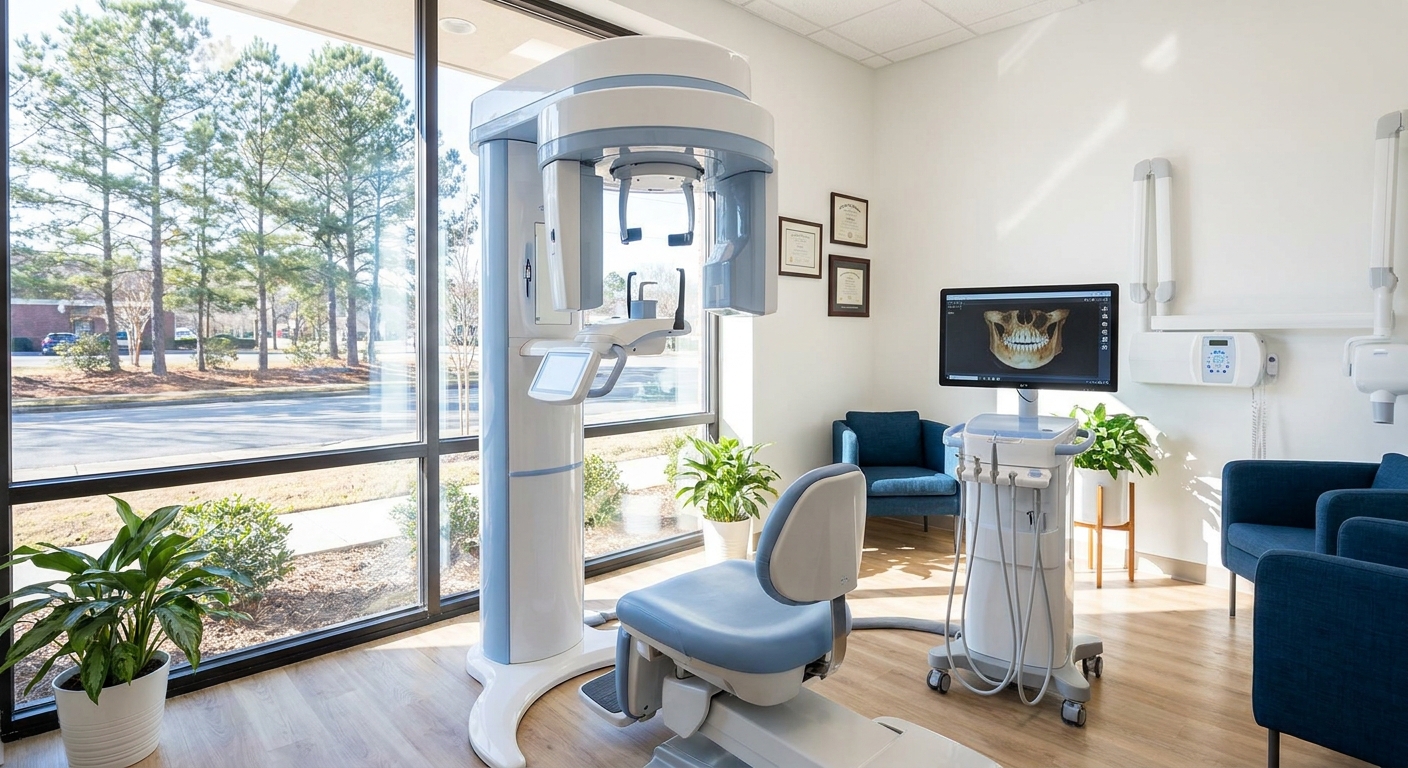
- X-rays. These reveal buildup below the gums, bone levels, and cavities developing between teeth.
- Probing. Your hygienist measures pocket depths around every tooth to gauge gum health.
- Comfort where you need it. For tender areas or work below the gum line, our hygienists use Oraqix, a topical numbing gel applied along the gums, so no needle is involved.
- Buildup removal with the Cavitron. The Cavitron is an ultrasonic scaler that uses vibration and a water stream to break tartar loose.
- Detail work with hand instruments. Your hygienist finishes around each tooth and just below the gum line by hand.
- Polishing. A gritty paste lifts surface stains from coffee, tea, and daily life. Some patients leave with a brighter-looking smile, though results vary by individual.
- Fluoride, when appropriate. Fluoride is among the preventive steps recommended in clinical practice guidelines on oral health care, and it may help support enamel health.
- Exam. Your dentist checks your teeth and reviews your X-rays, including any cavities you didn’t know were there.
- Education before you leave. Your hygienist explains what they found, what it means, and what to focus on at home.
That final step is where we focus. Our hygienists are thorough with patient education, so you’ll understand why one spot bled or why a particular area keeps collecting buildup. A patient who leaves understanding their own mouth may be more likely to maintain home care between visits.
Because we offer general dentistry along with preventive care and cleanings, the same thorough, step-by-step explanations apply to every patient in our chair. That patience helps anyone who feels nervous about getting back on track.
How Much Does a Teeth Cleaning Cost in Mooresville?
For most insured patients, a standard cleaning costs little or nothing out of pocket, since dental plans usually classify it as preventive care. A gingivitis cleaning, a deep cleaning, or a visit without insurance will cost more, and the fastest way to learn your actual number is to call with your insurance card ready.
Rivers Edge Dental accepts Delta Dental, Aetna, Principal, UnitedHealthcare, and BlueCross BlueShield of North Carolina. Most plans group routine cleanings, exams, and X-rays as preventive care, typically the most generous part of a plan. A gingivitis cleaning or deep cleaning carries a different procedure code than a standard cleaning, so your plan may treat it differently. That’s the main reason two people with identical insurance can pay different amounts for a “cleaning.” If you have Delta Dental, our guide to how Delta Dental handles cleanings and checkups in Mooresville covers the details.
Other factors that shape your out-of-pocket cost:
- Whether X-rays are due at this visit
- Whether you’ve already used this year’s covered cleanings
- Your deductible and annual maximum
- Whether a deep cleaning is split across more than one visit
If you learn late in the year that you need a deep cleaning, ask whether phasing it across two benefit years makes sense. We’ll work with you on timing while still giving your gums the care they need.
Without insurance, call and ask for the self-pay fee for your specific cleaning type. Since the type is chosen from your X-rays and probing depths, you’ll know what you need and why before agreeing to anything. We recommend care based on what your mouth shows.
Why Does Skipping a Year Cost You More Than One Missed Appointment?
Regular cleanings matter because what they catch, like gum inflammation and early cavities, usually doesn’t hurt until it has grown. Skipping a year lets those problems reach a stage that may take more time, more visits, and more money to treat.
Our team sees this pattern often. After a year or more away, some patients need a gingivitis cleaning because more inflammation has developed. Others have progressed further and need a deep cleaning. And many have cavities they had no idea about. That last finding surprises people most. You can feel perfectly fine, eat normally, and still have decay forming between two teeth where only an X-ray can catch it.
Gum health follows a similar arc. Untreated inflammation can progress to periodontitis, where, as the NCBI InformedHealth overview explains, the tissue and bone supporting the teeth start to break down. Gingivitis may be addressed with thorough cleaning in some cases. Once bone loss appears on X-rays, though, a deep cleaning may become necessary.
Cost follows the same logic. A small cavity found at a routine visit is often a simple filling. Left alone, decay can reach the nerve, which may mean a root canal and a crown, more chair time, and a larger bill. Catching it early is often easier.
Twice a year is the familiar schedule, but your visit interval should be based on your own gum health and risk. Some patients do well on the standard schedule, and some, especially after a deep cleaning, may need to come more often. We’ll tell you which applies to you and why.
What Will You Notice in Our Chair That You Didn’t Get Elsewhere?
You’ll notice two things at Rivers Edge Dental: hygienists who explain what they’re doing and finding as they work, and Oraqix topical numbing that helps keep sensitive areas comfortable. Patient education is where we focus most.
For many people, the hardest part of past cleanings wasn’t the scraping. It was lying there with no idea what was happening, then hearing “you need to floss more” on the way out. Here, our hygienists walk you through findings during the visit, in plain language, while you can still ask questions.
Comfort matters just as much if a previous visit went badly. Oraqix is applied along the gum line with no needle, easing the tender spots that make some people dread cleanings. If your dental anxiety runs deeper than a few sensitive teeth, mention it when you book so we can talk through comfort options that suit you. Anxiety-free dentistry here means your comfort needs are built into the plan from the start, not something you have to ask for twice.
Rivers Edge Dental is an independent practice, not part of a dental chain, and that shows in the time we spend getting to know you. If you’d like to explore options for a brighter smile, ask about teeth whitening at your visit.
Still Wondering About Time, Pain, or Insurance?
Here are short, direct answers to the questions Mooresville patients ask most before booking a cleaning.
How long does a tooth cleaning usually take?
A routine cleaning and exam often takes roughly 30 to 60 minutes, though it varies. A first visit with X-rays and full probing, a gingivitis cleaning, or a deep cleaning usually runs longer, and a deep cleaning is sometimes split into more than one visit. Ask how much time to plan for when you book.
Will a cleaning hurt if I haven’t been to the dentist in years?
Our hygienists use Oraqix topical numbing gel to help keep you comfortable, especially below the gum line or where inflammation has made gums tender. If you feel very anxious, tell us when you book so we can plan around it. We’d much rather adjust to you than have you grip the armrests.
What insurance plans does Rivers Edge Dental accept for cleanings?
Rivers Edge Dental accepts Delta Dental, Aetna, Principal, UnitedHealthcare, and BlueCross BlueShield of North Carolina. Have your member ID ready when you call, and ask how your plan covers the specific type of cleaning you may need.
Can I get a same-day appointment in Mooresville?
Call and ask about the next opening. If you’re dealing with tooth pain or swelling, say so right away so the team can look for the soonest available time.
What happens if my cleaning shows I need a deep cleaning instead?
If your X-rays show bone loss, we’ll explain why a deep cleaning may be the appropriate choice and what it involves, and you can ask about cost before anything starts. You won’t be rushed, and you’ll understand the reasoning first.
Ready to Get Back on Schedule?
Schedule your dental cleaning at Rivers Edge Dental in Mooresville by calling the office or booking online. We’ll answer your insurance and cost questions and welcome you without any judgment about how long it’s been since your last visit.
Before you call, take two minutes to check one thing: how many cleanings your plan allows per benefit year and how many you’ve already used. If you’re overdue, you may still have unused preventive visits this year, so booking now puts benefits you’re already paying for to work before they reset.
Ready for a Fresh, Clean Smile?
If it’s been a while since your last cleaning, or you’re simply ready to feel that just-polished confidence again, Rivers Edge Dental is here to help. Our team in Mooresville makes every appointment comfortable and thorough, so you can leave feeling your best. Give us a call and we’ll find a time that works for your schedule.
Individual experiences with dental treatments vary and depend on many factors unique to each patient, including oral health history, compliance with aftercare, and overall health.