Expertise provided by Dr. Moshos, Owner
You bite into something and feel a crunch that isn’t food, or your tongue finds a sharp edge where smooth enamel used to be. The question that matters right then isn’t how much it hurts. It’s whether putting this off until Monday, next week, or after your trip will cost you the tooth. That question is the real reason to see a dentist for broken tooth evaluation at Rivers Edge Dental quickly. The answer depends on the path the crack takes inside the tooth, and no one can see that path from the outside, including you.
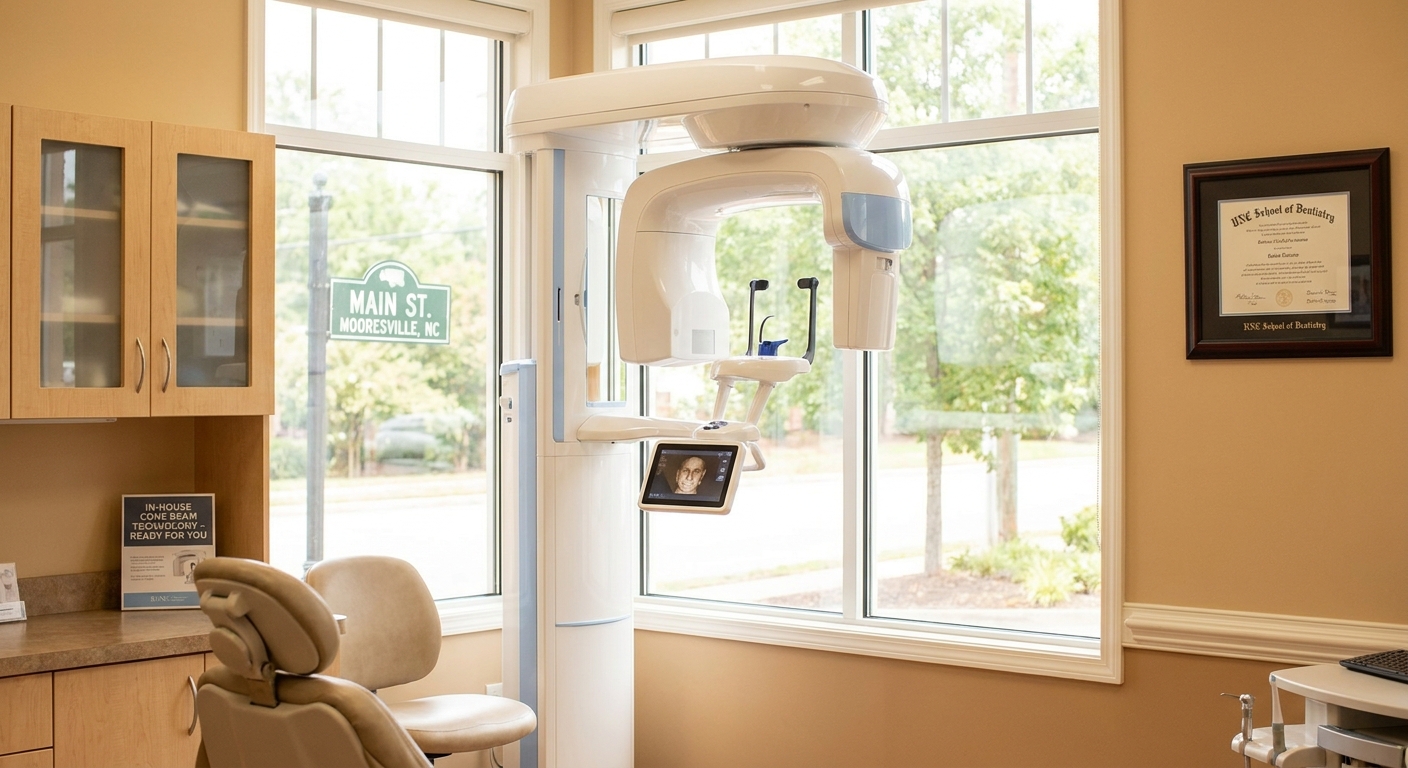
At River’s Edge Dental in Mooresville, NC, our dentist has spent 15 years in practice evaluating teeth like yours, and one pattern we’ve observed is that patients who come in early may have more treatment options available, while patients who wait may find their choices narrowed. We won’t scare you and we won’t upsell you. We’ll tell you plainly what we see so you can make a clear decision about your own tooth.
Why Does Every Hour Count After You Break a Tooth?
Every hour counts because a crack seldom stays where it began. Chewing can drive it deeper, and once it travels down the root, restoration may no longer be possible in some cases.
Your back teeth absorb heavy force every day. A cracked tooth no longer behaves like one solid piece, so the two sides can flex slightly with each bite, and that flexing can push the crack farther down. There’s no predictable timeline. One crack may sit still for weeks while another spreads in days, and you can’t feel that progress or judge it in a mirror.
When we asked our dentist at Rivers Edge Dental how waiting can affect outcomes, the answer was direct: the longer someone waits, the higher the chance that the crack extends down the root and restoration becomes less feasible. A tooth that only needs a crown today can become a tooth that needs a root canal plus a crown, or one that has to be removed. Delay can change the treatment, and it can change how much of your natural tooth you keep.
Picture a familiar scenario. A molar cracks on a Friday evening. It feels sharp but not painful, so you favor the other side and plan to call once life slows down. A couple of weeks later, cold water makes it ache. By then the crack has had two weeks of chewing to move, and the simplest repair may no longer be possible.
If the tooth is sore while you arrange a visit, over-the-counter pain relievers can help. An evidence-based clinical practice guideline on managing acute dental pain positions medication as temporary relief before definitive dental care, not a replacement for it. Pain medicine can quiet symptoms, but it does nothing to stop a crack from spreading.
What Does a Dentist for Broken Tooth Evaluation Actually Check on a Same-Day Visit?
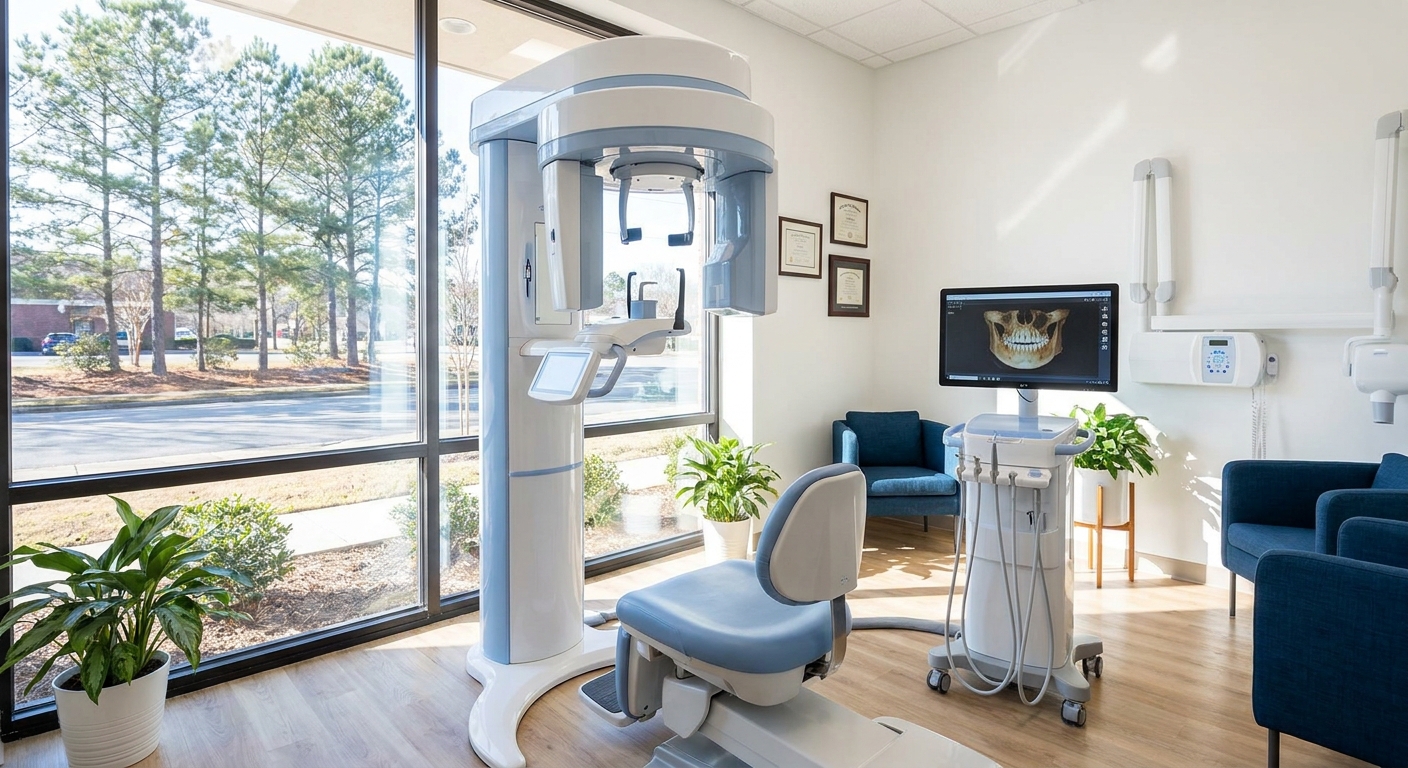
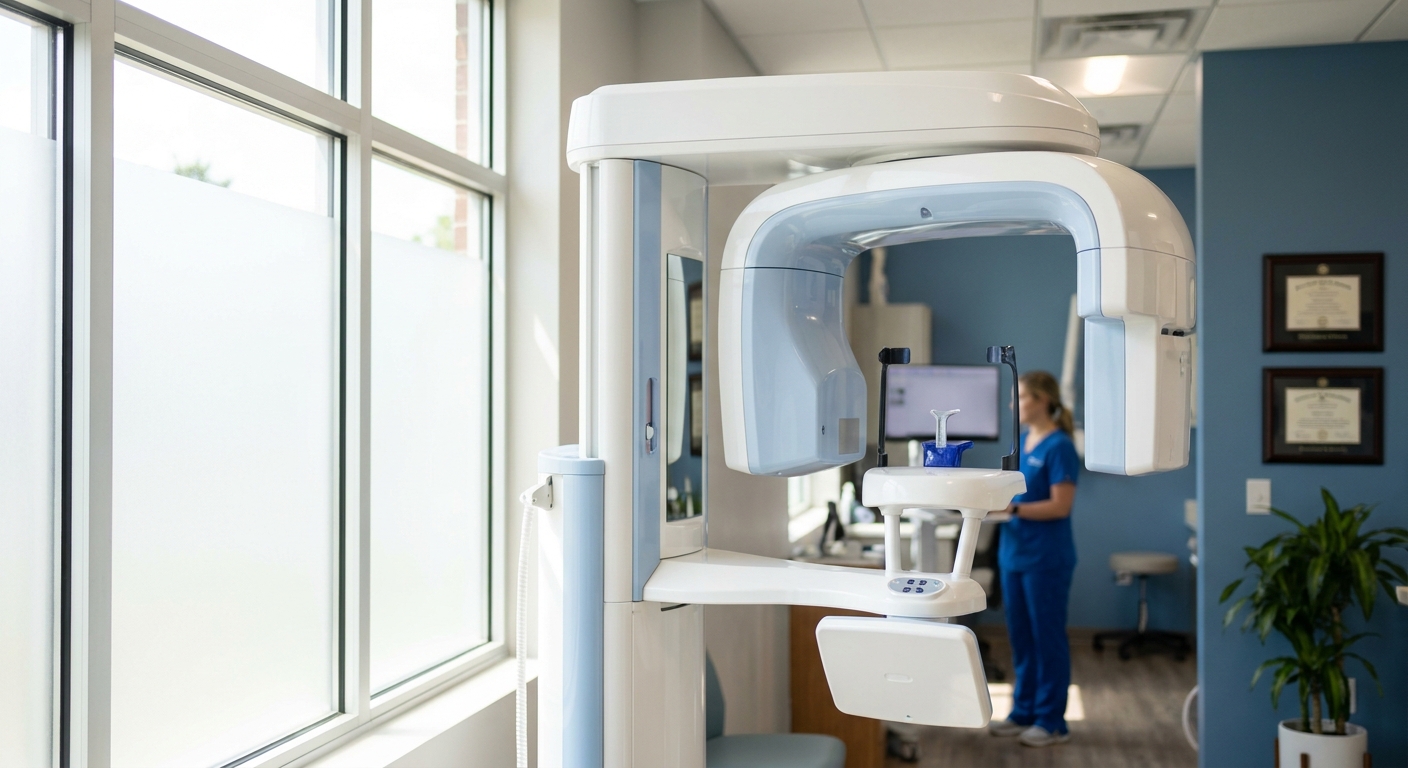
A same-day emergency visit combines imaging with a hands-on clinical exam to trace where the crack runs. When those two don’t give a clear answer, our dentist numbs the tooth and follows the crack directly, because sometimes that’s the only way to know whether the tooth can be restored.
We begin with imaging to see below the surface, around the root and the surrounding bone. Then our dentist at Rivers Edge Dental examines the tooth itself: the location of the break, how deep it appears, the condition of the gum nearby, and how the tooth responds. The deciding factor is the crack’s direction. If it heads down the root or splits through the center of the tooth, restoration may not be feasible in those cases.
Some cracks don’t reveal themselves easily. A fine crack may not show clearly on an X-ray, and the visible surface can look healthier than what lies underneath. In those cases our dentist numbs the area and works carefully along the crack line to see how far it really goes, then makes the call. There have been two cases in our dentist’s practice at Rivers Edge Dental where the answer only became clear after numbing and following the crack. That’s why a photo or a phone description can’t settle it. The tooth has to be seen, and sometimes explored.
Once the crack is traced, the decision often falls into one of three paths:
| What we find | What it may mean |
|---|---|
| The crack stays above the gumline and the nerve is healthy | A crown may be an option to hold the tooth together |
| The crack has reached the nerve but the root is intact | Root canal therapy, then a crown, may be considered |
| The crack runs down the root or splits through the center | The tooth may not be restorable, so extraction, then a conversation about what comes next |
You’ll leave knowing which path your tooth is on and why. We walk you through what we found, step by step, because you deserve to understand your own mouth before agreeing to anything.
Can You Really Get Seen Quickly Instead of Next Week?
When you call about a broken or cracked tooth, tell us right away so we at Rivers Edge Dental can work toward a same-day emergency visit rather than a routine opening weeks out. A broken tooth doesn’t fit neatly into a booked calendar, and every day of waiting is another day the crack can travel.
If dental anxiety is part of your story, we plan that first visit differently, and this matters. In one documented case, an anxious patient came to us at Rivers Edge Dental with a broken tooth, and our dentist didn’t open the conversation with “let’s numb you and see whether this tooth is restorable.” Instead, we used nitrous for comfort-focused care and built a personalized plan to handle whatever the tooth turned out to need. After evaluation, the crack proved non-restorable, and the patient elected extraction during that same visit. That was one patient’s experience, and treatment outcomes vary. Some broken teeth can be restored with a crown, others need root canal therapy, and some must be extracted, depending on the crack’s location and depth. When treatment can happen the same day, you arrive already comfortable and may avoid going home, dreading a second appointment for days, and coming back to be numbed all over again.
Many people who call with a broken tooth haven’t seen a dentist in years. Maybe a past experience kept you away, maybe life got busy, or maybe you were afraid of what you’d hear. That fear is extremely common, and our practice at Rivers Edge Dental is built around a judgment-free environment for exactly that reason. No one here will lecture you about how long it’s been. What we care about is addressing the tooth and keeping you comfortable while we do it.
Will Your Insurance Help, and What Will You Actually Pay?
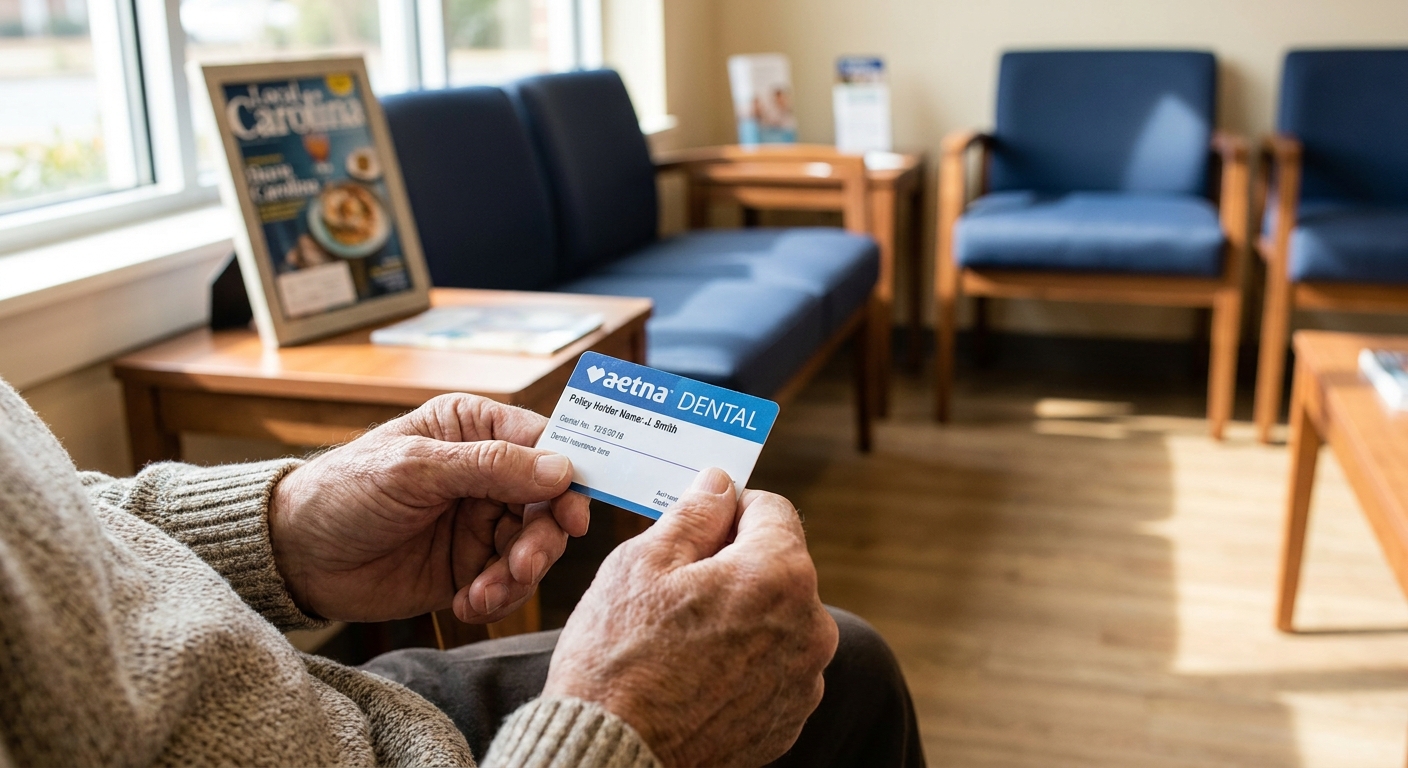
Once you know you can be seen quickly, cost is often the next worry. River’s Edge Dental accepts United Healthcare, Delta Dental, Aetna, Principal, and BlueCross BlueShield of North Carolina.
Dental plans vary widely, even under the same carrier. Many PPO plans cover part of crowns and root canals under basic or major services, but your percentage, deductible, and remaining yearly maximum all affect the final number. Ask us to look at your actual plan so you’re not guessing, and ask what the recommended treatment involves and what your share is likely to be before work begins.
If the tooth needs to come out, the conversation becomes more careful, because now you’re thinking about the extraction and about the space it leaves. We talk through what makes sense afterward, and you don’t have to decide in the chair. If you want time to think, talk with your family, or check your budget, that’s completely fine. Personalized care means a plan that fits your mouth and your situation, not pressure to accept work you didn’t come in for.
Your broken tooth is our focus during your visit. If we notice anything else, we’ll talk it through afterward at a pace that feels comfortable for you, though the right care for each tooth depends on what we find during your exam.
Why Waiting for Pain Means You’ve Already Waited Too Long
Cost is one reason people delay, but the more common one is “it doesn’t hurt yet.” The problem is that by the time a broken tooth hurts, the nerve is often already involved, and a crown alone may not be enough. Pain is a late signal, not an early warning.
Over 15 years, our dentist at Rivers Edge Dental has observed this pattern repeatedly. When a patient waits until the tooth hurts, it frequently needs at least a root canal. What could have been a crown becomes a root canal and a crown, or an extraction. A tooth with no pain can still have a crack that lets bacteria work toward the nerve, which is how a tooth that feels fine today can be throbbing or abscessed next week. The crack opens a path, the nerve can become irritated or begin to die, and infection can build quietly before you notice much.
A break that exposes dentin, or the nerve itself, can also go from mildly sensitive to very painful fast, especially with hot, cold, or sweet foods. Sensitivity to temperature, soreness when you bite, or a sharp pain when you release your bite can all mean the crack is nearing the nerve. If you notice any of these, call that day instead of waiting to see if it settles.
Not every line on a tooth is a problem, though. Many adults have craze lines, tiny surface lines in the enamel that look like cracks but stay shallow and don’t need treatment. An honest evaluation includes telling you when something is harmless. Being conservative means not drilling healthy tooth structure, and it also means not letting a true crack go unaddressed until it costs you the tooth.
The Kind of Dentist You Want When You’re Scared of What They’ll Find
When choosing a dentist for broken tooth evaluation, you want someone experienced enough to read a crack accurately, honest enough to tell you what they see, and patient enough to keep you comfortable. That’s the standard River’s Edge Dental holds itself to in Mooresville, NC.
Experience carries real weight on these calls. As our dentist puts it, after 15 years in practice, the more you see, the more you know. That matters most in the tricky cases, where an X-ray looks reassuring but the tooth doesn’t, or where a crack might stop just short of the root. Our dentist at Rivers Edge Dental also completed the MaxiCourse for implants at Augusta University about eight years ago. That advanced training deepens an understanding of bone, roots, and what happens after a tooth can’t be saved, which helps when we talk through your options following an extraction.
River’s Edge Dental is an independent practice, not part of a corporate dental chain, and the community has taken notice. The practice is currently in the top three for a NORMY award, which recognizes the best dentist in Mooresville, and Google has recognized the practice as a best practice based on its patient reviews.
None of that matters if you don’t feel safe walking through the door. Our approach at Rivers Edge Dental is comfort-focused, anxiety-free dentistry rooted in genuine connection and personalized care. We aim to save your tooth whenever it can be saved and to keep the process comfortable no matter how the tooth broke or how long it’s been since your last visit. Seeing someone arrive terrified and leave with their tooth taken care of and their fear a little smaller is what we count as a real win.
Questions You Might Be Too Nervous to Ask About a Broken Tooth
Can I wait a week to see a dentist for a broken tooth if it doesn’t hurt?
We don’t recommend it. A crack can keep spreading with every bite, even without pain, and waiting gives it time to reach the root. That can change a tooth that needed a crown into one that needs a root canal or has to come out.
What does a broken tooth evaluation include?
Imaging and a clinical exam to trace where the crack goes. When the answer still isn’t clear, our dentist may numb the area and follow the crack line directly to decide whether the tooth can be restored and what it needs.
Can I get a broken tooth evaluated and treated the same day?
Often, yes. If you’re anxious, we can plan the visit with nitrous so that whatever the tooth needs, whether that’s a crown, a root canal, or an extraction, can be handled in the same appointment instead of a second one you dread.
Will my insurance help with a broken tooth?
Many PPO plans contribute toward exams, X-rays, crowns, and root canals, though coverage varies by plan. We accept United Healthcare, Delta Dental, Aetna, Principal, and BlueCross BlueShield of North Carolina. Ask us about your specific plan before treatment begins.
What if I haven’t been to the dentist in years and I’m afraid of what you’ll find?
You won’t be judged here. Many people come to us at Rivers Edge Dental after years away, often because of a difficult past experience. We focus on addressing the tooth and keeping you comfortable, not on how the problem started.
How do I know if my broken tooth needs a crown, root canal, or extraction?
It depends on where the crack goes. If it stays above the gumline and the nerve is healthy, a crown may be enough. If the nerve is involved, you’ll likely need a root canal and a crown. If the crack runs down the root or through the center, the tooth may need to be removed in some cases. Over-the-counter pain relief can help in the meantime, and the clinical practice guideline on acute dental pain frames those medicines as a bridge to treatment, not a substitute for it.
Your Next Step Before the Crack Spreads
Here’s something you can do right now. If you still have the piece that broke off, put it in a small container. Note which tooth it is and whether it reacts to cold or to biting, and chew on the opposite side until you’re seen. Those details help our dentist at Rivers Edge Dental trace the crack faster, and the sooner it’s traced, the more treatment options may be available to you.
Call River’s Edge Dental in Mooresville, NC today, tell us you’ve broken or cracked a tooth, and ask for a same-day emergency visit so we can evaluate it before the crack extends and narrows your options.
Same-day extraction isn’t right for every patient; your exam and X-rays guide the personalized care we recommend, with comfort-focused options throughout.
Don’t Wait to Get Your Broken Tooth Evaluated
A broken tooth can feel worrying, but getting it checked doesn’t have to be. Whether you’re dealing with discomfort or simply want to understand your options, Rivers Edge Dental is here to help you protect your smile and your peace of mind. We’ll take the time to evaluate what’s happening and walk you through the next steps that make sense for you.