Expertise provided by Dr. Moshos, Owner
A lot of the lines people notice on their teeth aren’t cracks at all. They’re craze lines, and they usually come from everyday wear, clenching, or grinding over the years. So the first job of a good dentist for cracked enamel is to figure out which one you actually have before anybody talks about drilling. I mean, the line by itself isn’t the problem. What I’m looking for at Rivers Edge Dental is whether that line opens up when you bite down, or whether you’re having pain when you bite, because that’s when a harmless craze line has turned into a crack that needs attention.
If you’re reading this, you’ve probably noticed something. Maybe it’s a line on a front tooth that you suddenly see in every photo, or a small corner of enamel that chipped off, or one back tooth that gives you a sharp zing when you chew on that side. You’ve likely got three questions running in the background: is this an emergency, what is it going to cost, and is the dentist going to make you feel bad for waiting this long? At Rivers Edge Dental in Mooresville, I’m just gonna tell you how it is on all three, starting with what actually happens when you walk in.
What happens at your first visit with a dentist for cracked enamel?
Your first visit to Rivers Edge Dental is a diagnostic exam. The goal is to sort out whether you have a harmless craze line or a real crack, how far that crack runs through the tooth, and whether the nerve inside is still healthy. You should leave knowing which treatment your tooth actually needs and why, not just holding a menu of options.
It starts with a conversation. I want to know when you first noticed it, whether it hurts with cold or sweets, whether it hurts when you bite or when you let go of a bite, and whether you clench or grind. Those answers point me toward where to look. Then I look at the tooth closely and test it under biting pressure, one part of the tooth at a time. That matters because a crack that stays closed when you’re sitting still can flex open the second you chew. That flexing is often what causes the pain, and it’s a sign that a line has become a crack.
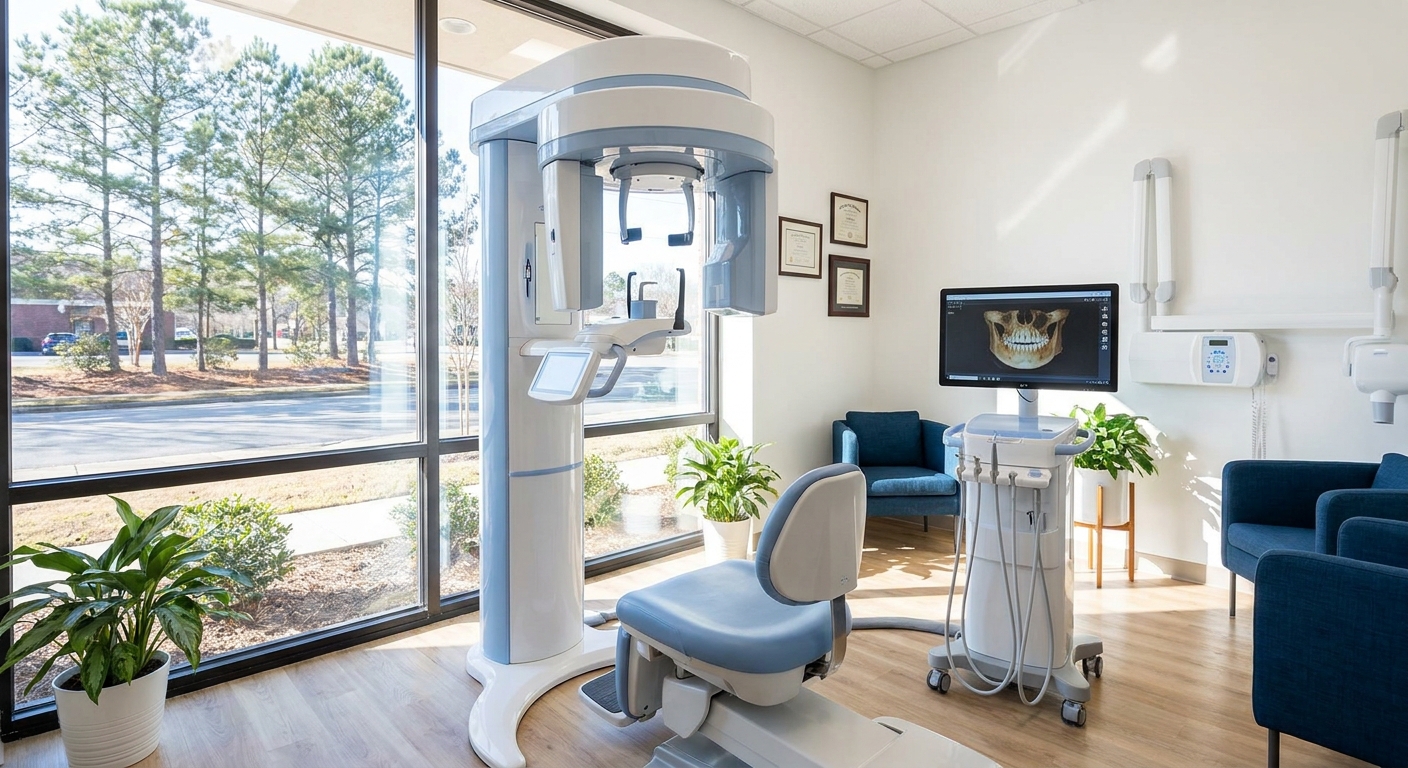
X-rays are part of the exam too, but I’m honest with patients about their limits. A lot of cracks don’t show up on an X-ray at all. What X-rays do show is decay, old fillings that may be weakening the tooth, and changes around the root that hint at nerve trouble. Cracked teeth can be hard to diagnose, and the appropriate treatment depends a lot on how far the crack extends, which is a point a comprehensive review of cracked tooth treatment makes clearly. That’s why I put more weight on testing the tooth than on any single picture.
Here’s the part nobody wants to hear, but you deserve to know it going in. Sometimes a crack that looks small on the outside has already let the nerve die, and the tooth needs a root canal. And sometimes the crack extends all the way to the floor of the tooth. Not long ago, a crack went right through the center of a patient’s tooth, and I told them it needed to come out. They were expecting a filling, you know, so it wasn’t easy news. But I’d rather tell you that on day one than patch something that may fail down the road.
Will you need bonding, a crown, or an extraction?
It depends on how far the crack goes. A small, shallow crack often starts with bonding. A crack that goes through more of the tooth often needs a crown to hold the tooth together. A crack that reaches the floor of the tooth or splits it through the center may mean the tooth can’t be saved.
On front teeth, I’ll often start with bonding for smaller chips, because it’s conservative and keeps as much of your natural tooth as possible. If the bonding holds, that’s great. If it chips off and you come back in, that tells me the tooth needs more support than bonding can give it. Then we start talking about a veneer or a crown, depending on how much tooth is missing. If you already have fillings in that tooth, it’s typically going to be a crown. Your bite matters too. If your front teeth meet edge to edge, a crown may hold up better than a veneer, because that bite puts a lot of force right on the biting edge.
Back teeth are a different story. I wouldn’t veneer a back tooth, because molars take heavy chewing forces and a veneer only covers the front surface. When a back tooth has a crack running through real tooth structure, a crown wraps the whole tooth and can help keep it from flexing apart. And if all you have is craze lines that aren’t opening and aren’t causing pain, I wouldn’t cut those teeth. We just watch them, and that’s it.
Here’s how the decision often breaks down at Rivers Edge Dental:
| What the exam finds | What it may mean | Common next step |
|---|---|---|
| Craze line, not opening, no pain on biting | Surface wear, not a true crack | Leave it alone and keep an eye on it |
| Small, shallow crack or chip | Damage limited to the outer tooth | Bonding |
| Bonding on a front tooth keeps chipping off | Tooth may need more structural support | Veneer or crown |
| Crack through more of the tooth, or a large old filling | Tooth is at risk of splitting | Crown |
| Crack with lingering pain or a nerve that isn’t responding | Nerve may be damaged or has died | Root canal, then often a crown |
| Crack reaches the floor of the tooth or splits it through the center | Tooth may not be able to be held together | Extraction, then a talk about replacement options |
What does cracked enamel repair cost in Mooresville, and will your insurance help?
Once you know what kind of crack you’re dealing with, the next question is almost always about money. Bonding is often among the less expensive fixes and is often billed much like a filling. A crown costs more because it covers and protects the whole tooth. Your exact out-of-pocket cost depends on what the tooth actually needs and on your plan, so Rivers Edge Dental gives you a real cost estimate before any work starts.
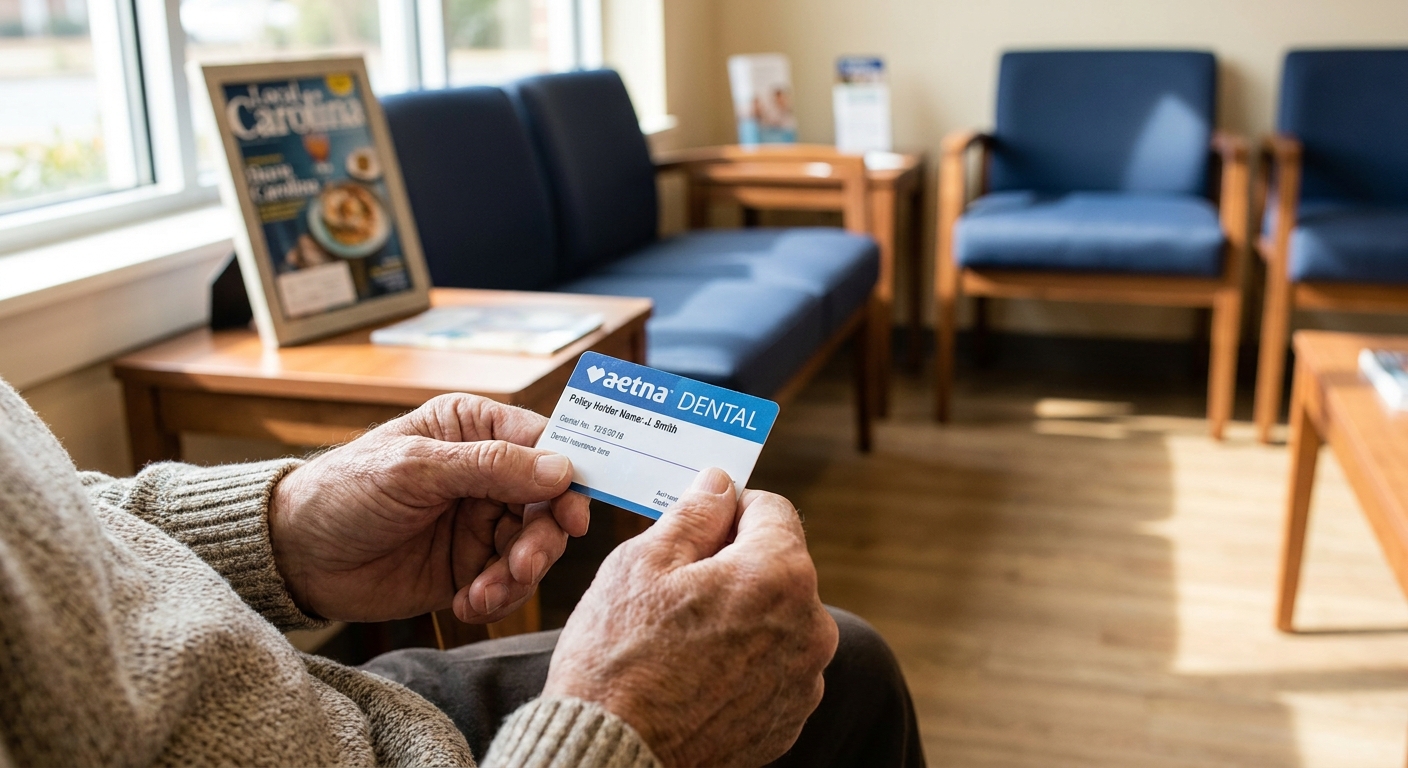
Rivers Edge Dental accepts UnitedHealthcare, Delta Dental, Aetna, Principal, and BlueCross BlueShield of North Carolina. Bring your card to the exam, and we’ll look at your benefits so you know your estimated share before you say yes to anything. I’d rather you have your actual number than a national average you found online, because a national average doesn’t know whether your tooth needs a little bonding or a root canal and a crown.
A few things push the price up or down. The biggest is how far the crack goes, since bonding, a crown, and a root canal plus a crown are very different levels of work. Front teeth versus back teeth matters, and so does whether an old filling has to come out first. On the insurance side, your deductible, where you are in your benefit year, and how much of your annual maximum you’ve already used all change what you pay. If you need more than one tooth treated, we can phase it. For example, doing one tooth in December and the next in January can help you maximize both years of benefits instead of maxing out one.
If you don’t have dental insurance, or you’re facing a high deductible, tell us up front. We’ll build a treatment plan that puts the most urgent tooth first, and you can ask the front desk at Rivers Edge Dental what payment options are available. I’m not gonna upsell anything. If bonding may do the job, you’re getting bonding. Just know that waiting doesn’t necessarily make a crack less expensive. A crack that could be bonded today can spread until it needs a crown or a root canal later.
Why does advanced residency training matter when someone is diagnosing your crack?
Cost is one piece of the decision, but the person reading your tooth matters just as much. The most challenging part of treating a cracked tooth is often the diagnosis, not the drilling. After dental school, I completed a residency in Advanced Education in General Dentistry, so I didn’t just graduate and start working on teeth on my own. I spent that extra time learning advanced techniques under supervision, and cracked teeth were part of that.
When you’re choosing a dentist for cracked enamel, what that training gives you is someone who knows how to read the signs a quick look may miss. The pain pattern, the way a tooth responds to biting on one cusp versus another, the old filling that’s been quietly wedging the tooth apart: those details help decide whether you get bonding, a crown, or a harder conversation. Enamel is incredibly tough material, and researchers supported by the National Institute of Dental and Craniofacial Research are still studying what gives teeth their strength and how cracks get started. When the science is still being worked out, careful hands-on diagnosis matters even more.
I’ve also completed extensive continuing education in tooth replacement. That might sound like it has nothing to do with a cracked tooth, but it does. When you understand what replacing a tooth really involves, you work harder to save the tooth you’ve got when it can be saved. And when it can’t, like that crack running through the center of the tooth, you can explain the situation plainly and talk through what comes next without guessing.
What if you’ve put this off because the dentist scares you?
Even with a thorough diagnosis and an honest price, a lot of people still hesitate for one reason: fear. You are not alone with this fear, it’s super common, and nobody at Rivers Edge Dental is going to lecture you about how long it’s been. We start by getting to know your history, then match the comfort support to what you need, from nitrous to oral sedation to IV sedation.
A lot of people find a crack and sit on it, not because they don’t care, but because the last dentist made them feel judged, or a procedure years ago hurt and nobody listened. So before we touch anything, I basically get to know their dental history. What happened before? What part of the visit is hardest for you: the sounds, the needle, lying back, or not knowing what’s coming? Once I know that, we can meet the patient halfway. Maybe that means explaining every step before I do it, maybe it means short breaks, and maybe it means sedation.
For a crown or a root canal on a cracked tooth at Rivers Edge Dental, sedation can be the difference between white-knuckling through it and barely remembering it. Nitrous, or laughing gas, can take the edge off and wears off quickly. Oral sedation, such as Valium or triazolam, is a pill you take before the appointment so you arrive calmer. IV sedation goes deeper, and it can be titrated, meaning adjusted, to the level you need during the procedure. We’ll talk through which option fits your health history and how anxious you feel, and you’re the one who decides.
Many patients report feeling more comfortable at their next cleaning after we tailor their first visit to their specific anxiety triggers, and those experiences matter to us. Anxiety-free dentistry isn’t a slogan here at Rivers Edge Dental. It’s how we plan the whole appointment.
Why do Mooresville patients trust Rivers Edge Dental with a cracked tooth?
Because other patients vouch for it publicly. Rivers Edge Dental is currently a top-three finalist in a local readers’ choice award for best dentist in Mooresville, and the practice has been recognized online for the strength of its patient reviews.
Those recognitions can matter when you’re choosing who gets to look at a cracked tooth and tell you whether it can be saved. They come from real people in Mooresville taking the time to write about their visits to Rivers Edge Dental, and that’s a different kind of proof than anything a dentist says about themselves. Read the reviews before you call. Look for what people say about being listened to, about honest recommendations, and about how they felt in the chair, because those are the things that matter most when you’re nervous and in pain.
Rivers Edge Dental is also independently owned, not part of a corporate dental chain. That means the person diagnosing your tooth is the same person deciding how the practice runs, with no quota from a corporate office pushing a crown when bonding may work. The genuine connection and personalized care we talk about comes from that setup. We want to be the whole family dentist you stick with for years, and you don’t get that by overselling someone on their first visit.
Is a cracked tooth an emergency? Answers to what patients ask most
A cracked tooth is an emergency if you have severe pain, swelling, bleeding that won’t stop, or a large piece of tooth missing, and you should call the same day. A small chip with no pain is often not urgent, but you should still call Rivers Edge Dental soon to get on the schedule instead of waiting to see whether it gets worse. If facial swelling is spreading or you have trouble swallowing or breathing, go to the emergency room.
Can a general dentist fix cracked enamel, or do I need a specialist?
Many cracked enamel cases are handled by a general dentist, especially one with advanced restorative training. Bonding, veneers, and crowns are all part of general dentistry. Some complex cases, like a crack running deep into the root that needs specialized root canal care, may be handled by an endodontist, and if that’s your situation, I’ll tell you.
How do I know if my cracked tooth can wait until Monday?
If it’s a small chip, there’s no pain, and you can eat on the other side comfortably, it’s often fine to be seen at the next weekday appointment. Calling Rivers Edge Dental on Friday, even just to get on the schedule, saves you a weekend of worrying. Pain that lingers after cold, pain when you release a bite, or any swelling means you should call right away.
What does bonding cost compared with a crown in Mooresville?
Bonding typically costs less and is often billed like a filling. A crown costs more, but it protects the whole tooth when a crack is moderate to severe. Rivers Edge Dental gives you your actual estimate, with your insurance factored in, before treatment.
Will the dentist judge me for waiting too long?
No. Rivers Edge Dental is built as a judgment-free practice for people who delayed care because of anxiety, embarrassment, or bad past experiences. The focus is on your tooth and what it needs now, not on how it got here.
Does Rivers Edge Dental accept my insurance for cracked tooth repair?
Rivers Edge Dental accepts UnitedHealthcare, Delta Dental, Aetna, Principal, and BlueCross BlueShield of North Carolina. Bring your card, and the team will review your benefits and your estimated out-of-pocket cost before any work begins.
What happens if my cracked tooth is too damaged to save?
If the crack reaches the floor of the tooth or splits it through the center, extraction may be necessary. We’ll explain why the tooth can’t be held together and talk through your options for replacing it, so you don’t walk out with a gap and no plan.
What should you do today about a cracked tooth?
Call, describe what you’re feeling, and get the tooth looked at before the crack has a chance to spread. Until your visit, chew on the other side, skip ice and hard foods like hard candy or popcorn kernels, and avoid very hot or very cold drinks on that tooth if they set it off.
Here’s what the path often looks like once you’re in. The exam tells us what kind of crack you have. If it’s bonding, that’s often done in a single visit. A traditional crown often takes two visits, with a temporary crown in between while the final one is made. After the crown goes on at Rivers Edge Dental, I take a postop bitewing X-ray to check the margins, meaning how well the crown’s edges seal against your tooth, because a crown that doesn’t fit right can let bacteria in. If the nerve is involved, the root canal comes first, and then the crown.
Prevention matters too, especially since many of the craze lines and cracks I see come from clenching and grinding. If you wake up with a sore jaw, or someone tells you that you grind at night, bring it up at your Rivers Edge Dental visit. Protecting your teeth from that nightly pressure may help keep a small crack from becoming a bigger one. Chewing ice is another habit worth breaking, since it puts sudden stress on enamel.
If you’re looking for a dentist for cracked enamel in Mooresville, call Rivers Edge Dental to schedule an exam and get a same-visit diagnosis, a real cost estimate, and a treatment plan you understand. One thing to pay attention to before you call: if the pain hits when you let go of a bite rather than when you bite down, tell the front desk. It’s one of the telling signs of a cracked tooth, and it helps us know exactly where to start.
Schedule Your Cracked Enamel Evaluation
If you’ve noticed sensitivity, rough edges, or visible lines in your teeth, waiting often makes the damage worse. Our team at Rivers Edge Dental understands that cracked enamel needs prompt attention to prevent further complications. We’ll evaluate your specific situation and discuss the right approach to protect your tooth and restore your comfort.
Individual experiences with cracked tooth treatment vary based on the extent of damage, tooth location, and individual health factors.