You’ve waited too long to get the dental care you need because of fear, but it doesn’t have to stay that way. Finding the right dentist for dental fear adults can transform your visits from nerve-wracking ordeals into calm, confidence-building experiences. In this guide, you’ll learn why anxiety happens, how to spot a comfort-focused practice, and which strategies—from talk-through techniques to sedation—can help you finally complete that long-overdue checkup.
By focusing on gentle care, clear communication, and stress-reduction methods, a dentist who understands your needs will put you in control. Whether you’ve avoided the chair for years or just feel uneasy, the recommendations below will arm you with questions to ask and steps to take. You’ll discover how tailored environments, proven therapies, and optional sedation can ease your mind so you can focus on a healthy smile.
Understand dental anxiety
Dental anxiety and dental phobia often start with a bad memory—perhaps a painful filling or an unpleasant sound in the operatory. Over time these fears compound, so many adults skip routine visits and only show up for emergencies. That cycle reinforces worry and leads to more complex problems later on [1].
Anxiety can range from mild queasiness when you think about the dentist to full-blown panic at the sight of a waiting room. You might notice symptoms like accelerated heartbeat, sweating, or difficulty breathing as soon as you schedule an appointment. Recognizing your triggers—whether it’s the drill’s noise, the smell of latex gloves, or a sense of helplessness—helps you and your provider plan effective coping strategies.
Unchecked dental fear doesn’t just make you miss cleanings. It can cause untreated cavities to grow, lead to gum disease, or even affect your overall health. By learning more about your anxiety, you’ll feel empowered to choose a dentist who specializes in making fearful patients comfortable.
Causes and triggers
Various factors can spark dental anxiety:
• Prior painful procedures, especially without adequate numbing
• Feeling out of control in the chair
• Embarrassment over the condition of your teeth
• Fear of injections or gag reflex
Because everyone’s experience is different, it helps to share all your worries before treatment starts. A dentist who listens to concerns will tailor each visit rather than apply a one-size-fits-all approach.
Impact on oral health
When anxiety keeps you away, small issues escalate. Cavities that could have been filled easily may require root canals. Gum inflammation can progress to periodontitis, raising risks for heart disease and diabetes. In the worst cases, patients present only for emergency treatments, reinforcing their fear and avoidance behavior and creating a vicious cycle of dental fear if not properly managed [1].
Understanding this link between anxiety and health outcomes underscores why you deserve a dentist who prioritizes comfort and trust.
Identify supportive dentists
Not every practice is equipped to serve adults with dental fear. When you search for your next provider, look beyond basic credentials. A truly supportive dentist for fearful patients will combine training in anxiety management with a patient-centered philosophy.
Before you book, consider these qualities in a provider:
- A reputation for gentle care, with reviews praising calm, painless visits
- Certification or continuing education in sedation dentistry, behavior management, or special-needs care
- Clear willingness to explain every step as they go [2]
- Flexible pacing—no rushing through exams or hurrying you out the door [3]
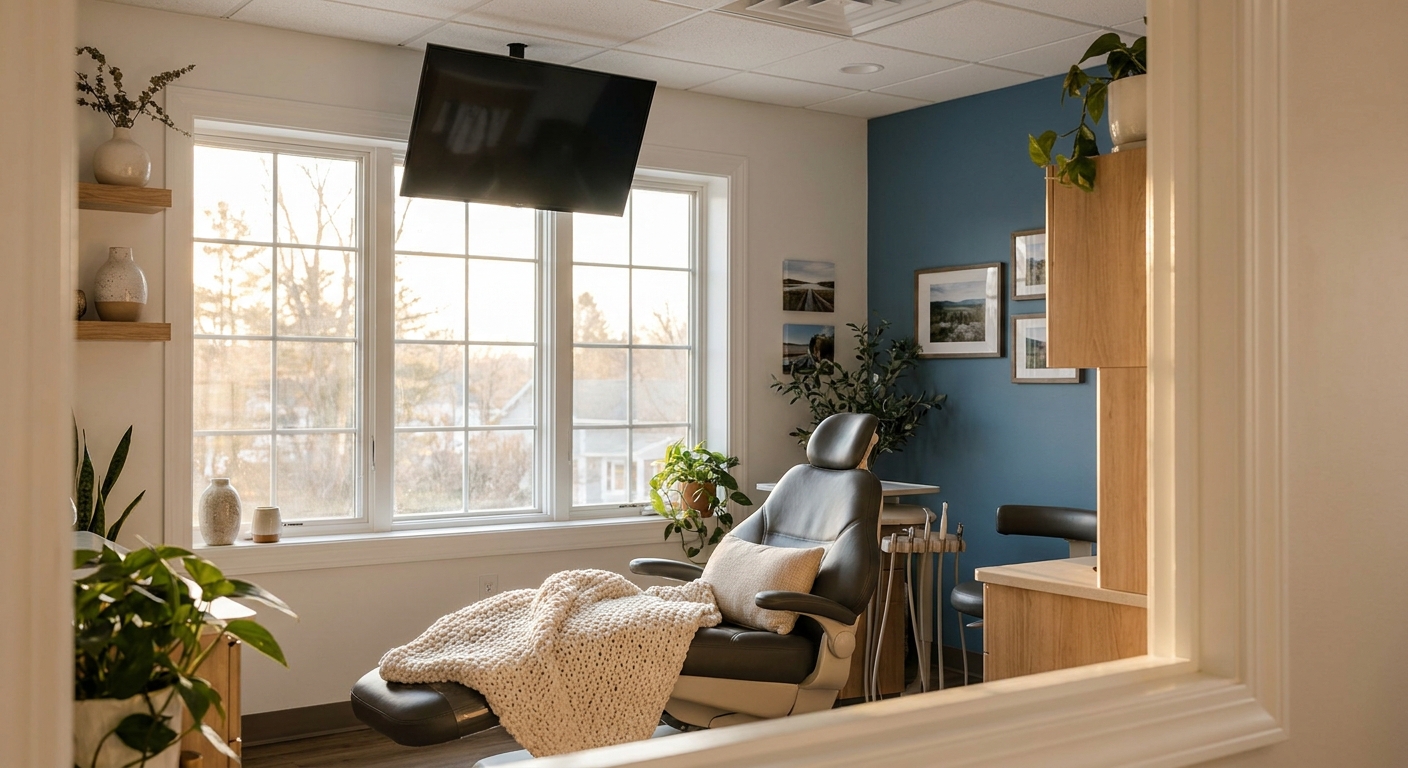
- Comfortable office setup—blankets, noise-cancelling headphones, dimmable lights [4]
- Staff empathy—receptionists and hygienists who listen to concerns and follow your stop signal
You can also call ahead and ask specific questions: “Do you offer nitrous oxide?” “What do you do for someone who’s never had a filling?” Their answers will reveal whether they understand dental phobia and treat you as a whole person.
Checking credentials and reviews
Formal qualifications matter—look for dentists who have advanced training in sedation or behavior guidance. At the same time, patient testimonials often highlight the soft skills that no diploma can capture. Online reviews mentioning a “compassionate dentist appointment,” “low stress dental care,” or successful outcomes after years of avoidance can point you toward a provider who gets it [5].
Explore comfort-focused techniques
Once you find a promising practice, dive into the specific techniques they use. Comfort-focused dental care covers a spectrum of approaches designed to help you stay calm and cooperative.
Communication strategies
A dentist who listens to concerns will begin with a thorough discussion of your fears [6]. They might:
• Use plain language to describe each tool and its purpose
• Demonstrate on a model or let you handle a mirror before anything touches your mouth
• Agree on nonverbal signals—raising a hand if you need a break
These “tell-show-do” methods reduce the unknowns and give you back a sense of control [1].
Control-enhancing methods
Feeling powerless in the chair exacerbates anxiety. Look for practices that:
• Offer a stop-signal system you can use anytime
• Allow you to choose background music or watch TV during treatment
• Give you periodic progress updates so you know what’s coming next
Such small adjustments build trust and lower stress, helping you breeze through even a thorough cleaning or exam [7].
Calming office environment
The surroundings matter almost as much as the techniques. Warm lighting, soothing colors, and aromatherapy can help you relax the moment you step inside. Some offices place lavender diffusers or play soft instrumental music to soften the clinical edge of a dental suite. If you’re sensitive to sounds or smells, ask whether the practice customizes the ambience for nervous patients [8].
Consider psychotherapeutic interventions
For many adults, talk-through tools and environmental tweaks go a long way—but sometimes deeper work is needed. Psychotherapeutic interventions like cognitive behavioral therapy (CBT) target the root of your fears.
Behavioral therapies
CBT helps you identify negative thought patterns—“The drill will hurt me”—and replace them with realistic coping statements. Sessions might include relaxation training, guided imagery, and homework assignments to practice calming exercises. Studies show CBT is among the most accepted and successful treatments for dental anxiety and phobia [1].
Exposure therapy
Exposure therapy gradually desensitizes you by having you face dental stimuli in a controlled way. You might start by viewing photographs of dental tools, then visit the operatory just to sit in the chair, then progress to a quick cleaning with no drill. Combining relaxation techniques with controlled exposure helps rewire your brain’s fear response [9].
Combining approaches
Often CBT and exposure go hand-in-hand. A mental health professional and your dentist can coordinate care so that insights from therapy translate directly into the dental chair. If you’re open to psychotherapeutic options, ask your provider whether they work with psychologists or counselors who specialize in dental fear treatment.
Evaluate sedation dentistry
When therapy alone isn’t enough or you need to tackle several procedures at once, sedation dentistry can bridge the gap. It’s not about knocking you out—rather it offers a spectrum of relaxation levels so you stay comfortable and cooperative. Below is an overview of common options:
| Sedation type | Description | Typical use case |
|---|---|---|
| Nitrous oxide | Inhaled “laughing gas” that takes effect quickly and wears off fast | Cleanings, minor fillings |
| Oral conscious sedation | Pill taken before appointment; you’ll feel drowsy and may not remember much | Longer or multiple procedures |
| Intravenous (IV) sedation | Medication administered through a vein; deeper relaxation while remaining responsive | Complex treatments, surgical extractions |
| General anesthesia | Full unconsciousness, usually reserved for patients who can’t cooperate at all | Extensive surgery or special needs cases |
These methods let you choose how much you sense of the procedure while still receiving safe, expert care. Over two million patients have had positive experiences with sedation dentistry from trained professionals [10]. If you carry trauma from past dental visits, sedation can break the cycle of fear and avoidance.
At Virginia Family Dentistry, for instance, you can select oral meds, nitrous oxide, or IV sedation based on your comfort level and the complexity of your treatment [11]. They even collaborate with Certified Registered Nurse Anesthetists when advanced monitoring is needed.
Prepare for your visit
Once you’ve chosen a provider and a strategy, your first appointment can feel less daunting with a bit of advance planning.
- Practice breathing exercises at home to anchor yourself during tense moments.
- Bring headphones and a playlist of your favorite calming music [4].
- Write down questions or concerns so you won’t forget them under pressure.
- Arrange for a friend or family member to come along for moral support, especially if you plan sedation.
By arriving with a clear plan—and by doing a quick check of the practice’s COVID-safe protocols if relevant—you’ll shift from dreading the appointment to seeing it as a step toward better health.
Choose follow-up care
After your visit, momentum is everything. Celebrate smaller victories—maybe you asked a question, sat through a cleaning, or tried nitrous oxide. Then schedule your next checkup before you leave, locking in a routine that keeps fear at bay.
Between appointments, reinforce positive associations with dental care by rewarding yourself—perhaps a favorite treat or a few minutes of mindful meditation. If anxiety creeps back, review your coping strategies or ask about a brief talk-through session with the hygienist.
A patient focused dental care practice will track your progress, not just your cavities. They’ll adjust pacing, techniques, and sedation levels as needed so every visit feels more manageable than the last [12]. Over time you’ll find your dental fear fading and your smile shining—proof that the right dentist for dental fear adults is out there, ready to welcome you.
By understanding your anxiety, vetting supportive providers, and exploring comfort-focused and therapeutic tools, you’ll regain confidence in the dental chair. Take the first step today: reach out to a gentle dentist for adults and plan a stress-free, compassion-driven appointment on your terms [13].
References
- (NCBI)
- (dentist who explains procedures)
- (dentist who takes time with patients)
- (stress free dental visit)
- (compassionate dentist appointment)
- (dentist who listens to concerns)
- (comfortable dental exam)
- (dentist for sensitive patients)
- (Les Belles NYC Dentistry)
- (SedationCare)
- (Virginia Family Dentistry)
- (patient focused dental care)
- (gentle dentist for adults)