Expertise provided by Dr. Moshos, Owner
You rehearse the phone call in your head for three days before you dial. You’re trying to figure out which question will tell you if this dentist is actually different, or if you’re about to walk into the same rushed, dismissive appointment that made you avoid dental care in the first place. You might even worry that years away mean you’ll be told you need dentures. That hesitation makes sense. When you’ve been talked over, hurried, or made to feel bad about your teeth, finding a dentist who listens to concerns isn’t a nice extra anymore, it’s the whole decision. This guide walks through what listening can look like at Rivers Edge Dental in Mooresville, NC, from the first five minutes of your visit to what sedation costs, so you can tell the difference before you ever sit in the chair.
First, you are not alone with this fear. It’s common, and it is not a character flaw. When patients come to Rivers Edge Dental after years away, most mention the same worry: that they’ll be judged for waiting so long or for the condition their teeth are in. That judgment never comes. The dentist’s job is to help you feel safe enough to get the care your dental health needs, not to make you feel worse about postponing it.
What Happens in the First Five Minutes Can Reveal a Dentist Who Listens to Concerns
The first five minutes can show you whether a dentist treats your anxiety as an obstacle to get around or as a conversation worth having. At Rivers Edge Dental, those minutes happen face to face, before any dental work starts, with the dentist asking about the specific moment that made you afraid.
At a lot of offices, your fear gets one checkbox on an intake form. Someone glances at it, the chair tips back, and the light is in your eyes before you’ve finished saying hello. That’s often where the old feelings come right back. At Rivers Edge Dental, the dentist sits down facing you, makes eye contact, and gets to know you first, with no mirror, no explorer, and no tray of instruments in your line of sight.
Then comes the part most people don’t expect: the dentist asks whether there was a particular moment that made dental visits harder for you. Maybe a shot didn’t fully numb and someone kept going. Maybe you got lectured about flossing while you were lying there unable to answer, or maybe it was a whole childhood of bad visits. Whatever it was, we at Rivers Edge Dental listen to it, and if you need a second to collect yourself while you talk about it, you get that second.
So why go this deep before a cleaning? Because once we know the moment, we can plan around it. If your fear started with numbing, we talk about numbing differently. If it started with feeling trapped, we set up your signal to stop before anything begins. That sit-down conversation is where your Rivers Edge Dental plan comes from. The goal is for you to feel heard and understood.
A Dentist Who Respects Fear May Change the Treatment Timeline Itself
Listening doesn’t stop when the chair tips back. When a dentist listens, the schedule can bend around you instead of you bending around the schedule. At Rivers Edge Dental, that can mean spending time slowing down and talking you through each step before you’re ready to let the work continue.
Here’s what that can look like in practice. Before anything new happens, the dentist tells you what’s coming, what it will sound like, and what it might feel like. If you raise your hand, everything stops. It’s not “just one more second,” it stops, and then we talk about what you felt and you decide when we pick back up. Sometimes patients need extra time before they say okay, keep going. That happens with kids, and it happens with adults too, and it’s fine. We provide family dental care at Rivers Edge Dental for many Mooresville households, so if you’re a parent worried your child will have a bad first experience, this is why we slow down. We would rather meet the patient halfway than push through.
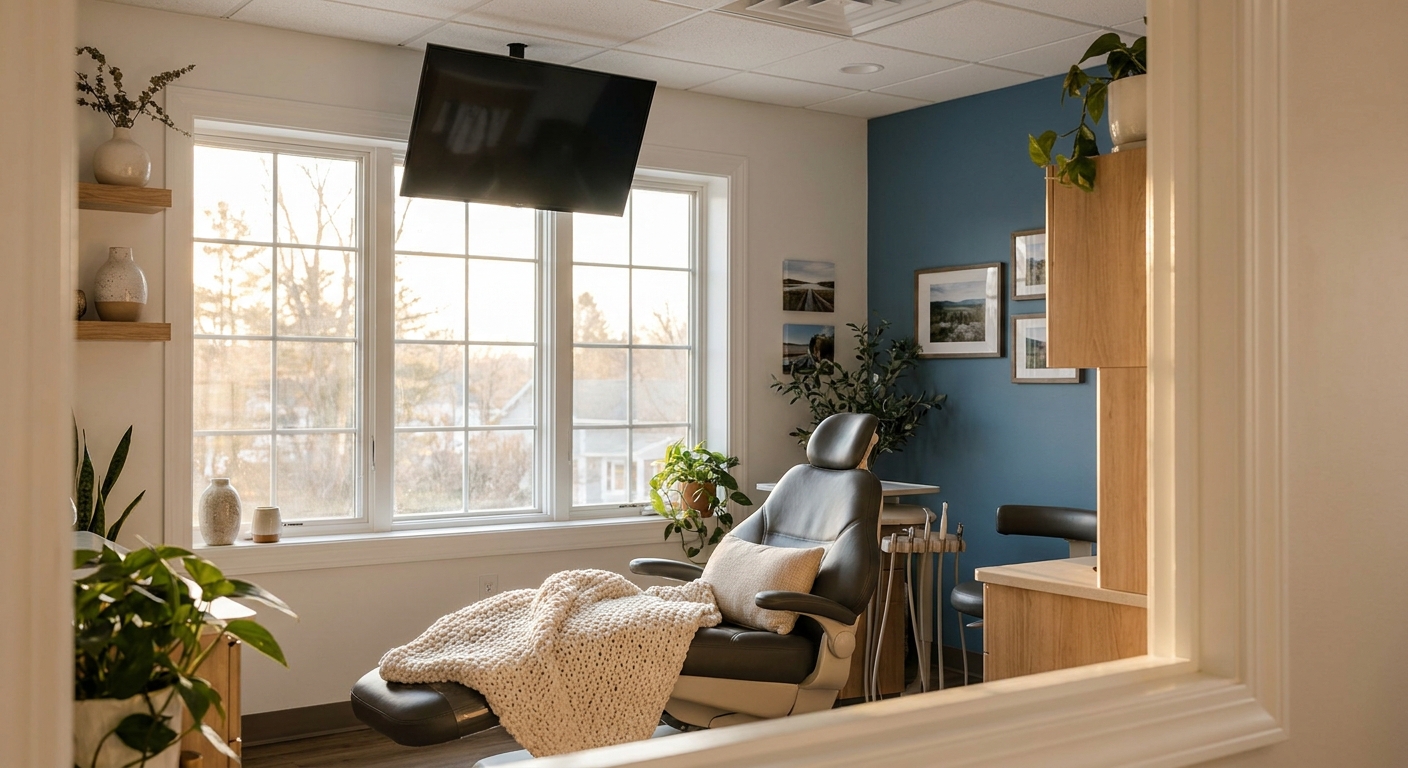
You also get to choose how you want to feel in the chair. Some patients want a regular blanket because the office feels cold and exposed, and some want a weighted blanket because the pressure helps them settle. Some want headphones so they never hear the sounds that set them off, and some want to zone out on the TVs mounted on the ceiling at Rivers Edge Dental. You pick. These are small ways of handing back a little control and making the atmosphere feel less clinical.
Picture coming in for a cleaning and tensing up the second you hear the scaler. You might lift your hand, we pause, the dentist explains what that tool is doing, and maybe you decide headphones would help before we try again. Rivers Edge Dental is an independent practice, not part of a corporate chain, so there’s no outside quota deciding how fast you need to be done.
How Should You Evaluate Sedation Options When a Dentist Listens to Your Situation?
For some patients, slowing down and comfort tools like blankets and headphones are enough, and for others they’re only the starting point. The right sedation option depends on your individual fear and your real life, not just what’s available. Rivers Edge Dental starts with slowing down, then nitrous oxide, then oral sedation, and saves IV sedation for cases that may call for it.
Sedation is a tool, not a sales pitch. A dentist who listens asks what you can handle emotionally, but also what you can handle logistically. Can you get a ride? Do you need to drive straight back to work? Is a large bill going to create a new kind of stress? Those answers matter as much as how nervous you feel, so here’s the order we at Rivers Edge Dental walk through, and why.
| Option | Approximate cost | How it works | When it may fit |
|---|---|---|---|
| Slowing down plus comfort tools | Part of your care | Step-by-step explanations, pauses when you raise your hand, blankets, headphones, ceiling TVs | First choice for everyone |
| Nitrous oxide | Roughly $100 | Breathed through a small nose mask and titrated until you feel comfortable; you can often drive yourself home | Some adults who still feel anxious after slowing down |
| Oral sedation | Discussed before you book | A prescribed sedative such as Valium, typically taken about an hour before your visit, or triazolam; you’ll need someone to drive you | Patients who may need more than nitrous alone |
| IV sedation | Roughly $1,000 | Sedation delivered through an IV for longer or more involved work; you’ll need someone to drive you | May be appropriate for some cases |
Nitrous is often where adults start because it’s easier. It works quickly, the dose gets adjusted until you feel okay, and it wears off fast enough that you can often leave on your own. If that’s not enough, the Rivers Edge Dental dentist can prescribe an oral sedative. Valium may help calm you down, and triazolam is sometimes chosen for patients who prefer not to remember the visit afterward. Because these are sedative medications, we’ll review your health history and medications, go over timing, and make sure you have a ride lined up well before the day.
IV sedation is available at Rivers Edge Dental, but we discuss it carefully because it costs more and carries more risk. When a dentist jumps straight to the most involved option without asking about your life, that’s a sign they may not be listening.
How Listening May Support Patients Over Time, Not Just During One Appointment
Sedation can help get you through the door, but one measure of a dentist who listens is whether some patients need less help as time goes on, not just whether one visit went okay. At Rivers Edge Dental, one patient went from needing IV sedation for his crowns to having a crown done with no sedation at all.
He was a teacher who had worn his teeth down, and he came to us at Rivers Edge Dental through a referral because his previous provider didn’t offer sedation. He needed about 16 crowns, and he was sure there was no way he could get through that much work without being sedated. The dentist didn’t argue with him or tell him to tough it out. She went through every sedation option with him, including cost and logistics, and let him weigh what made sense.
Together they settled on IV sedation at Rivers Edge Dental for the crown appointments and the delivery appointments, and nitrous with Valium for his cleanings. Then something happened over the months he kept coming in, because each visit added a little trust and he needed less sedation as he went. Later, when he needed an extra crown, he had it done with no sedation at all, though this was one person’s experience and other patients’ needs may differ.
That’s what listening can offer over time. When every pause is honored and every explanation is honest, some people’s anxiety gradually lessens. If you’re curious what cosmetic and restorative results can look like for your smile, ask to see before-and-after photos during your consultation. Results look different for everyone, and the Rivers Edge Dental dentist will tell you plainly what may be realistic for your teeth.
Which Questions on Your First Call Separate a Dentist Who Listens from Marketing?
You can’t see from a website how a dentist actually treats anxious patients, which is why your first phone call matters. Ask what happens at the office, not how the office describes itself. Three questions do most of the work: will the dentist hear about my past dental trauma before anything starts, can I come in just to talk before any work is scheduled, and will the dentist stop if I signal for a break.
Almost every dental website describes itself as gentle, caring, and compassionate, and those words cost nothing. What may separate a dentist who listens from a marketing page is whether the practice has habits built into its day that support you. So when you finally make that call you’ve been rehearsing, try these:
- “Will anyone note my past dental trauma before I come in?” A good answer sounds like the office wants to hear about it ahead of time. At Rivers Edge Dental, the dentist also covers it face to face before anything starts, so you’re never explaining yourself with your mouth open.
- “Can I schedule a consultation just to talk about my fears before we book any work?” If the answer is yes without hesitation, that may be a strong sign. If they push you to book a full cleaning and X-rays first, take note of that.
- “If I raise my hand mid-procedure, will the dentist actually stop?” Listen for a clear yes, not “we’ll try to work quickly.”
- “What sedation options do you have, and what do they cost?” A practice that listens can give you rough numbers on the phone and explain whether you can drive yourself home.
Reviews help too, but read them for specifics. “Great staff” tells you very little. A review that says the dentist paused when someone got overwhelmed, spent extra time talking before starting, or offered nitrous instead of pushing IV sedation tells you how that office may behave when a nervous person is in the chair. Those are the details worth considering when you’re comparing Mooresville dentists.
Does Listening to Patient Concerns Include Being Upfront About Insurance and Cost?
It can, because money worry piles right on top of dental fear. A dentist who listens explains what you’ll likely pay, including what your plan says about sedation, before you choose a treatment date.
Think about how surprise bills feel when you’re already anxious. You finally get through an appointment and feel proud of yourself, and then the front desk hands you a number you never saw coming. That moment can undo trust, so we talk about cost first. Rivers Edge Dental accepts Delta Dental, Aetna, UnitedHealthcare, BlueCross BlueShield of North Carolina, and Principal, and we’ll look at what your specific plan says before you commit to anything.
Sedation coverage is where people get caught off guard most, because it varies from plan to plan. Some plans cover it in certain situations, some limit it, and some don’t address it at all. Instead of guessing, our Rivers Edge Dental team checks your benefits and walks you through your likely out-of-pocket share for whatever comfort option you’re considering. Nitrous oxide runs roughly $100 and IV sedation roughly $1,000, and we’d rather you know those numbers now than feel blindsided later.
If you need more than a filling or two, the Rivers Edge Dental dentist can lay out a treatment plan and talk through whether it makes sense to phase it, so you can maximize benefits across two plan years instead of paying more out of pocket than you need to. And we stay conservative about it, because if a filling will do the job of keeping a tooth healthy, we recommend that. That conversation happens at your pace too, since financial respect is just another way of listening.
What Do Anxious Patients in Mooresville Ask Before They Book?
Most nervous patients ask the same handful of questions before they finally book. Here are honest answers to the ones we hear most at Rivers Edge Dental.
How do I know if a dentist in Mooresville will actually listen to my dental anxiety?
Ask on the first call whether the dentist sits down to talk about your past trauma before any work starts, and whether they’ll pause when you raise your hand. At Rivers Edge Dental, both happen at every visit. Vague answers like “we’re very gentle” are not the same as a clear yes.
What sedation options should a dentist who listens offer for severe dental fear?
Look for a range, not a single default. Rivers Edge Dental offers nitrous oxide, oral sedation such as Valium or triazolam, and IV sedation. The dentist explains cost and logistics for each one, including whether you can drive yourself, before you decide.
Will my dental insurance cover sedation if I have severe anxiety?
It depends on your plan, and sedation coverage varies more than most services. Rivers Edge Dental accepts Delta Dental, Aetna, UnitedHealthcare, BlueCross BlueShield of North Carolina, and Principal, and we’ll check your benefits and explain your expected out-of-pocket cost before you schedule treatment.
Can a dentist help me need less sedation over time if I start with severe fear?
Some patients find their needs change, though everyone moves at their own pace. Many patients with severe fear continue to need some level of sedation, and that is completely okay; in one individual case, a Rivers Edge Dental patient who began with IV sedation for his crowns later had a crown done without sedation, but this is not typical, and your own comfort-focused plan may look very different. Trust, honest explanations, and pauses that are always honored can support that kind of progress for some people.
What should happen in the first appointment with a dentist who takes anxiety seriously?
A real conversation should come before any exam. At Rivers Edge Dental, the dentist sits facing you and asks about the moments that made you anxious. Once work begins, slowing down and talking you through it can take extra time before you’re ready to continue, and that’s okay.
How can I find reviews that show a Mooresville dentist actually listens to patient concerns?
Skip the generic praise and look for specific accommodations: a dentist who paused mid-appointment, spent extra time talking first, or offered a lighter sedation option. Those details show how an office may behave when a frightened patient is in the chair.
Your First Step Is a Conversation, Not a Procedure
One way to find out if Rivers Edge Dental is different is to come in and talk before any treatment is on the table, because nothing gets scheduled until you’ve been heard.
Call Rivers Edge Dental in Mooresville, NC to schedule a consultation where the dentist will sit down and talk through your specific fears before any treatment begins. You can bring your insurance card, your questions, and as much or as little of your history as you’re ready to share. We at Rivers Edge Dental see patients from Mooresville, Davidson, Cornelius, Kannapolis, and the Lake Norman area, and whole families are welcome.
Here’s one thing to consider before you call: write down the single moment from a past dental visit that still makes your stomach drop, and mention it on the call. You don’t have to explain it perfectly. Naming it is what lets us at Rivers Edge Dental plan your first visit around it, and it may be the moment a nervous patient starts to realize this time can go differently.
Ready to Be Heard at Your Next Dental Visit?
If you’ve been putting off care because past experiences left you feeling unheard or anxious, it might be time to try a different approach to dentistry. Rivers Edge Dental welcomes patients in Mooresville, NC who want a dentist who takes the time to understand their concerns and work at a pace that feels right. Your comfort matters, and a conversation is the first step toward the care you deserve.
Individual experiences vary, and results differ for each patient.