Expertise provided by Dr. Moshos, Owner
Maybe it’s a throbbing molar that woke you up at 3 AM, or your jaw started swelling after lunch and now you can’t think about anything else. When you call Rivers Edge Dental in Mooresville, NC, there’s a real chair waiting for you, not a voicemail promising a callback next week. That’s because the practice blocks three appointment slots every single day (morning, afternoon, and end of day) and keeps them off the schedule until someone calls in pain or a new patient needs to get in fast. If you’re searching for a same day dentist in Mooresville, NC because something hurts right now, this guide shows you how to get into one of those chairs today.
The goal is pretty simple: you get seen today, you know your cost before anything starts, you pick how much help you want to stay calm, and the dentist addresses the immediate problem or helps bring it under control, with your next step already on the calendar. It works the same whether it’s your own tooth or your kid’s. As Dr. Moshos puts it, “I’m just gonna tell you how it is,” so here it is: the earlier you call and the more clearly you describe what’s going on, the more options you’ll have. And nobody here is going to lecture you about how long it’s been since your last visit.
What Should You Have Ready Before You Call a Same Day Dentist in Mooresville, NC?
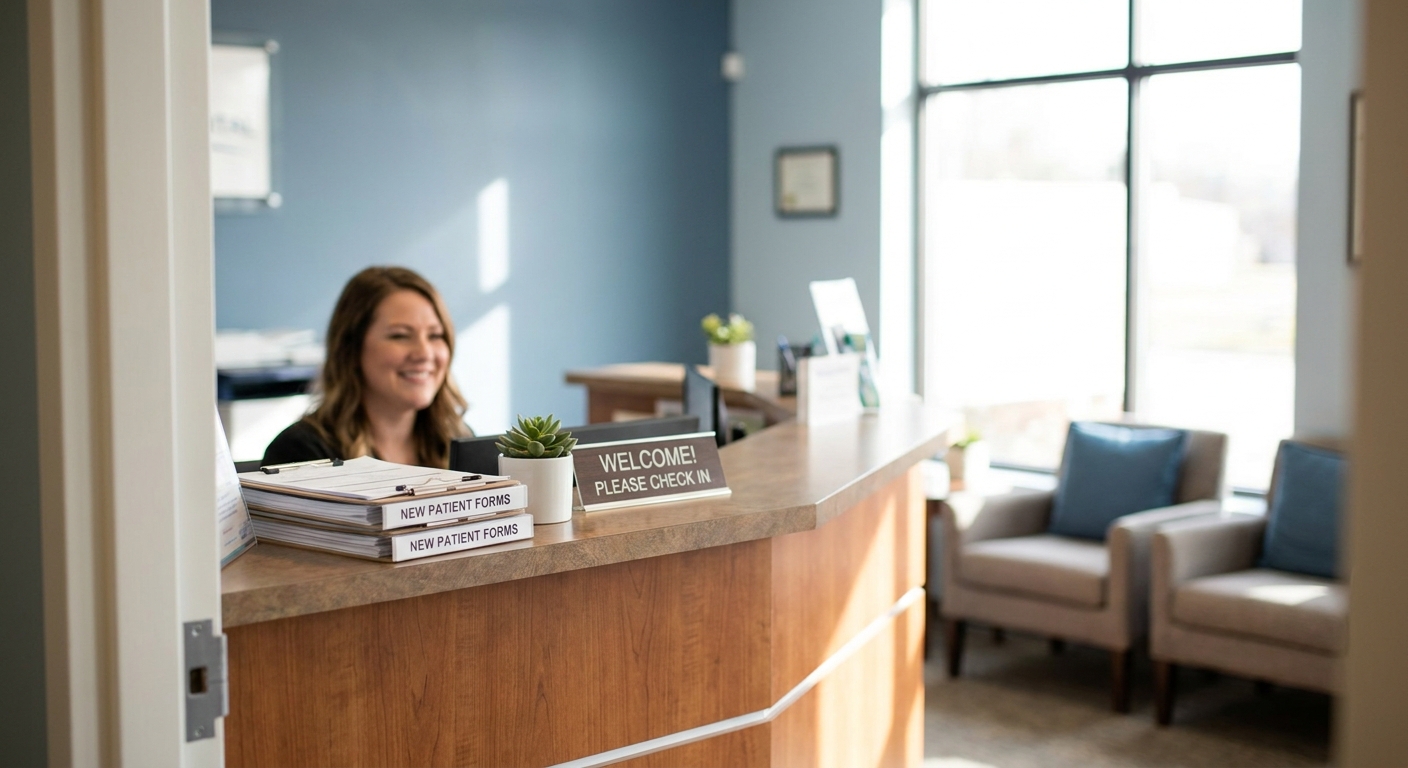
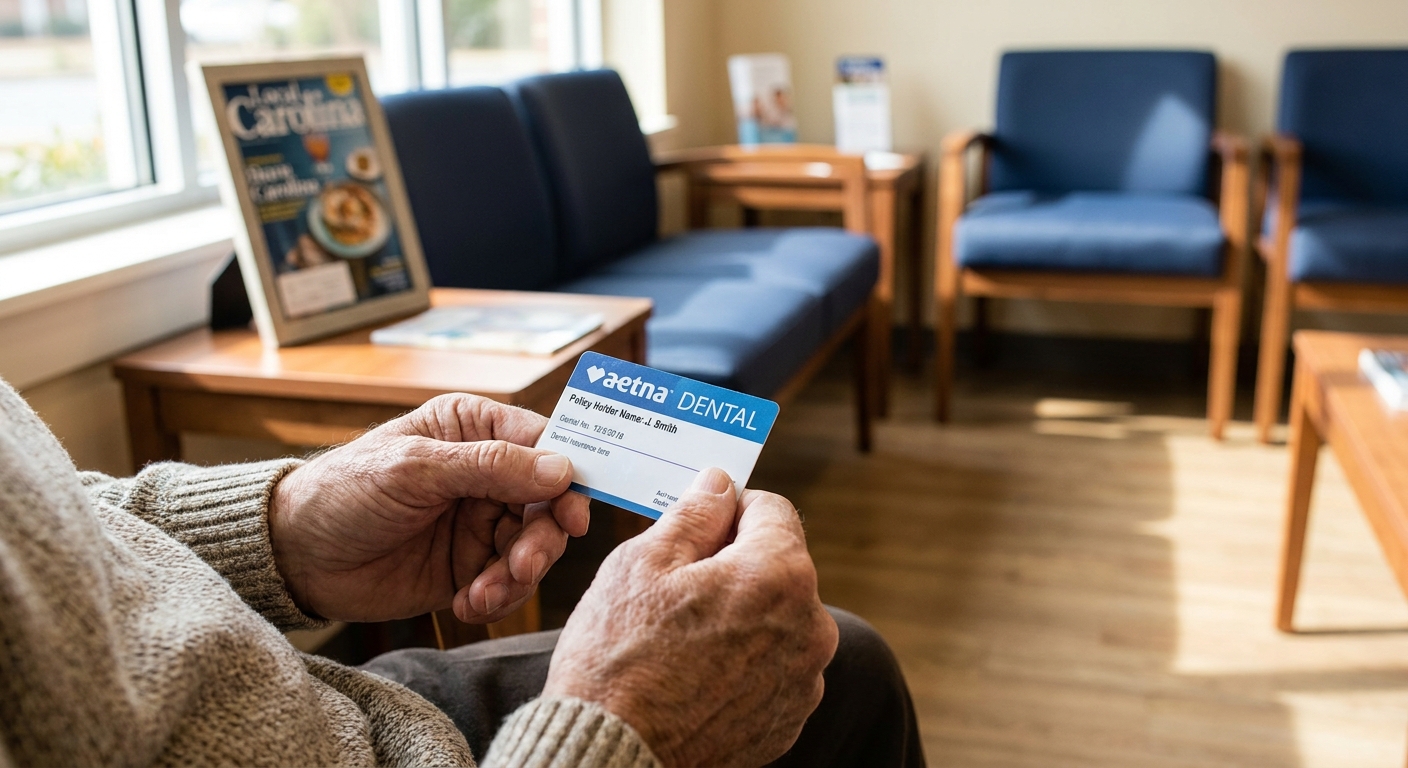
Before you dial, grab three things: your insurance card (front and back), a clear photo of the area if you can see swelling or a broken tooth, and a short description of when the pain started and what makes it worse. That’s all the front desk needs to figure out how urgent your situation is, check your benefits, and hold your slot.
Here’s the quick checklist:
- Insurance card, front and back. Your member ID and group number let the front desk check your benefits while you’re still on the phone.
- A photo, if there’s something to see. This could be swelling in your cheek or gum, a cracked or broken tooth, or a spot that looks red or puffy. Use good light and pull your cheek back with a clean finger.
- Your pain story. Note when it started, whether it throbs, stabs, or aches all the time, and what sets it off (cold, hot, biting down, or lying flat at night).
It also helps to have a list of your medications and any allergies, especially to antibiotics. If an antibiotic or sedation becomes part of the plan, the dentist needs that information first, and having it ready saves time when every minute counts.
So why does the pain story matter so much? Because “my tooth hurts” could mean a lot of things. “It started Sunday night, cold water makes it shoot up into my ear, and now it throbs on its own” tells the front desk something very different from “it twinges when I chew on that side.” The first one might be a nerve that’s getting inflamed, and the second one might be a crack. Both deserve attention, but the details help the team decide who gets the next open chair.
The photo matters most if you’re an established patient calling late in the day. If you call after 3 PM and all three same-day slots are full, a patient of record can text a photo so the dentist can look at it right away and decide what to do next. More on that in Step 1.
Step 1: Call Before Noon, Because Only Three Same-Day Chairs Open Each Day
Call as early in the day as you can. Rivers Edge Dental holds three same-day slots every day (one in the morning, one in the afternoon, and one at the end of the day), so calling before noon gives you the widest choice of times.
Those three slots are protected on purpose. Dr. Moshos keeps them off the regular schedule so they don’t fill up with cleanings and checkups weeks ahead of time, and they stay open until someone calls in pain or a new patient needs to get in fast. So if you call at 8:30 in the morning, you might get to choose the morning, afternoon, or end-of-day slot, whichever works around your job or your kids’ school pickup. If you call at 1 PM, the morning one is gone and you’re choosing between what’s left.
What happens if you call at 3 PM and all three slots are already taken? It depends on whether we already know you. If you’re a patient of record, we can talk you through it by phone, or have you send a photo. In some situations, such as when a patient who recently had a deep filling develops swelling, the dentist may be able to call in an antibiotic to help manage the infection while scheduling you for the next available appointment.
If you’re a new patient, or if the situation isn’t clear from a phone call, you’ll be fit in the next morning. That’s not us brushing you off. I mean, prescribing for someone whose history we don’t know, based on a description alone, just isn’t safe dentistry. Getting you in first thing the next day is the careful way to do it, and it means a real exam and real X-rays instead of a guess.
And one more thing, because people do this all the time: pain bad enough that you’re searching for a dentist usually doesn’t get better on its own overnight, so don’t wait to “see how it feels tomorrow.” Call in the morning.
Step 2: Tell the Front Desk Exactly How It Hurts So the Team Knows How Fast to Move
Once you’re on the phone, be specific about the type of pain, any swelling, and how long it’s been going on. That’s how the front desk decides who gets the next open chair, and swelling or signs of infection move to the front of the line.
Rivers Edge Dental handles three kinds of problems the same day you call: tooth pain (throbbing, sharp, or constant), abscesses with swelling, and same-day extractions. That covers most “I need help today” calls. If something else is going on, like a broken tooth, tell the front desk exactly what happened and send that photo, and they’ll find you the fastest safe path.
Swelling gets priority because an abscess is an infection, and infection can spread into the tissue around the tooth if it isn’t treated. That’s a big part of why dental guidelines sort problems by urgency. A systematic review of safe dental care recommendations looked at how clinical guidelines separate urgent problems like pain, swelling, and infection from routine care that can wait. Our front desk uses that same logic when the phone rings, so the person with a puffy jaw goes ahead of the person with a mild twinge.
When you call, use phrases like “my cheek is swollen,” “it throbs even when I’m not eating,” or “I can’t sleep because of it.” Those words help the team understand you need to be seen today, not Thursday.
Now for the safety part, because it really matters. If swelling is spreading toward your eye or down your neck, if you’re having trouble breathing or swallowing, or if you have a high fever with a swollen face, go to the nearest emergency room or call 911 right away. That kind of spreading infection needs hospital care first, and once you’re stable, we can take care of the tooth that started it.
If you want to read more about oral health conditions while you wait, the National Institute of Dental and Craniofacial Research has plain-language health information.
Step 3: How Much Will This Emergency Visit Actually Cost You?
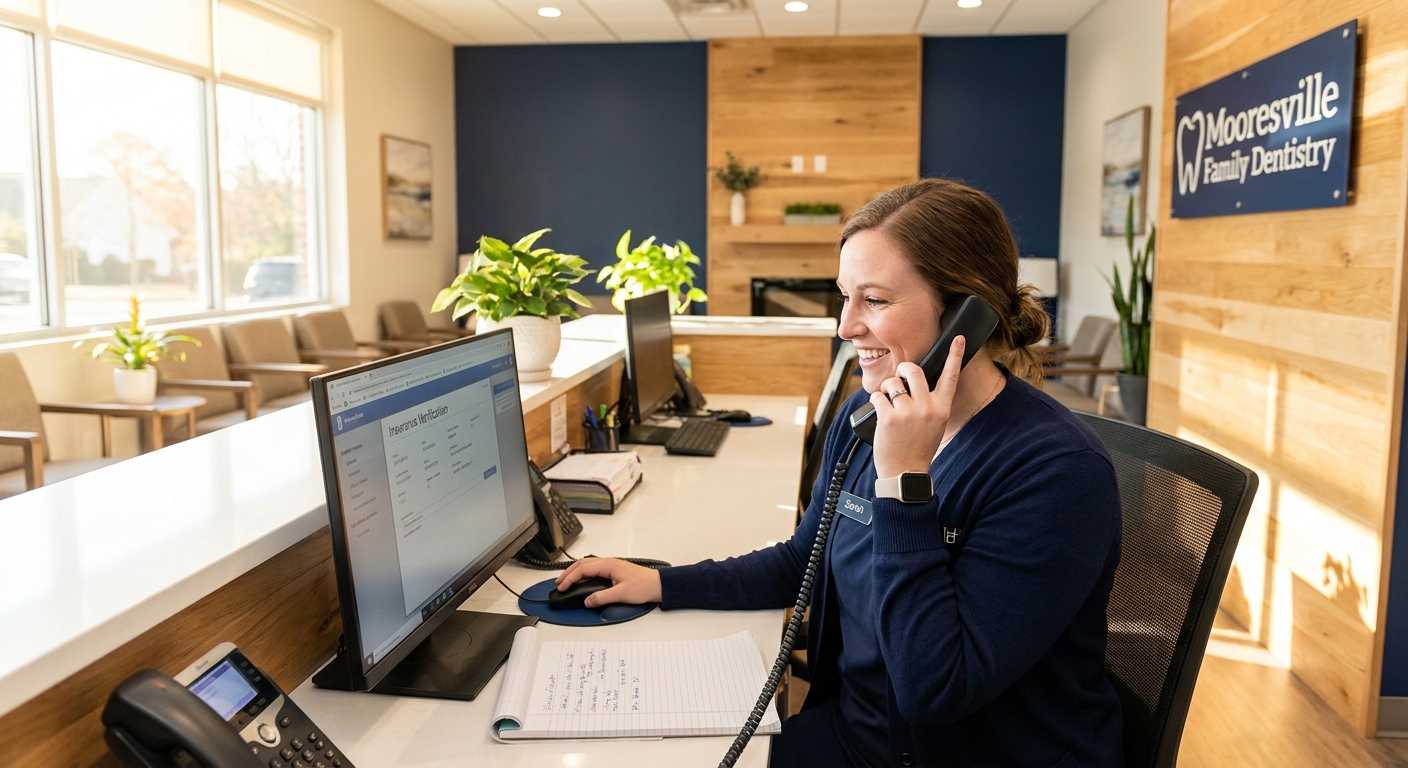
After urgency, the next question on most people’s minds is money. You’ll know your out-of-pocket cost before treatment starts. Rivers Edge Dental accepts United Healthcare, Delta Dental, Aetna, Principal, and BlueCross BlueShield of North Carolina, and the front desk checks your benefits and tells you your share before anyone picks up an instrument.
That order matters a lot. Plenty of people put off calling, even when they’re in real pain, because they’re afraid of the bill. They picture sitting in the chair, getting worked on, and then getting hit with a number they never agreed to. So the front desk takes that fear off the table first: you give them your insurance information, they check your actual coverage, they tell you what you’ll owe, and then you decide, so there are no surprises in the mail three weeks later.
“I’m not gonna upsell anything” during an emergency visit, as Dr. Moshos says. The point of a same-day appointment is to help address your immediate pain and manage any infection. If the dentist sees that you may eventually benefit from additional work like a crown or root canal, you’ll hear about it honestly, with the reasons laid out step by step, but it becomes a plan for later instead of a pitch while you’re hurting. If you need more than one thing, we can phase it into a comprehensive treatment plan so you can maximize both years of benefits instead of paying more out-of-pocket all at once.
If your plan isn’t on that list, or you don’t have dental insurance, ask for the cost upfront anyway. You get the same honest conversation about price before treatment, just like everyone else.
For sedation options, the dentist talks through what makes sense for your situation, and the costs vary by method. That’s covered in the next step.
Step 4: Scared of the Chair? Choose Your Comfort Level When You Arrive
If cost isn’t what’s holding you back, fear might be. You choose how much help you want to relax, from nitrous oxide to oral sedation to IV sedation. The dentist matches that choice to your needs, your health history, and your budget, and usually starts with the lightest option that may work for your situation.
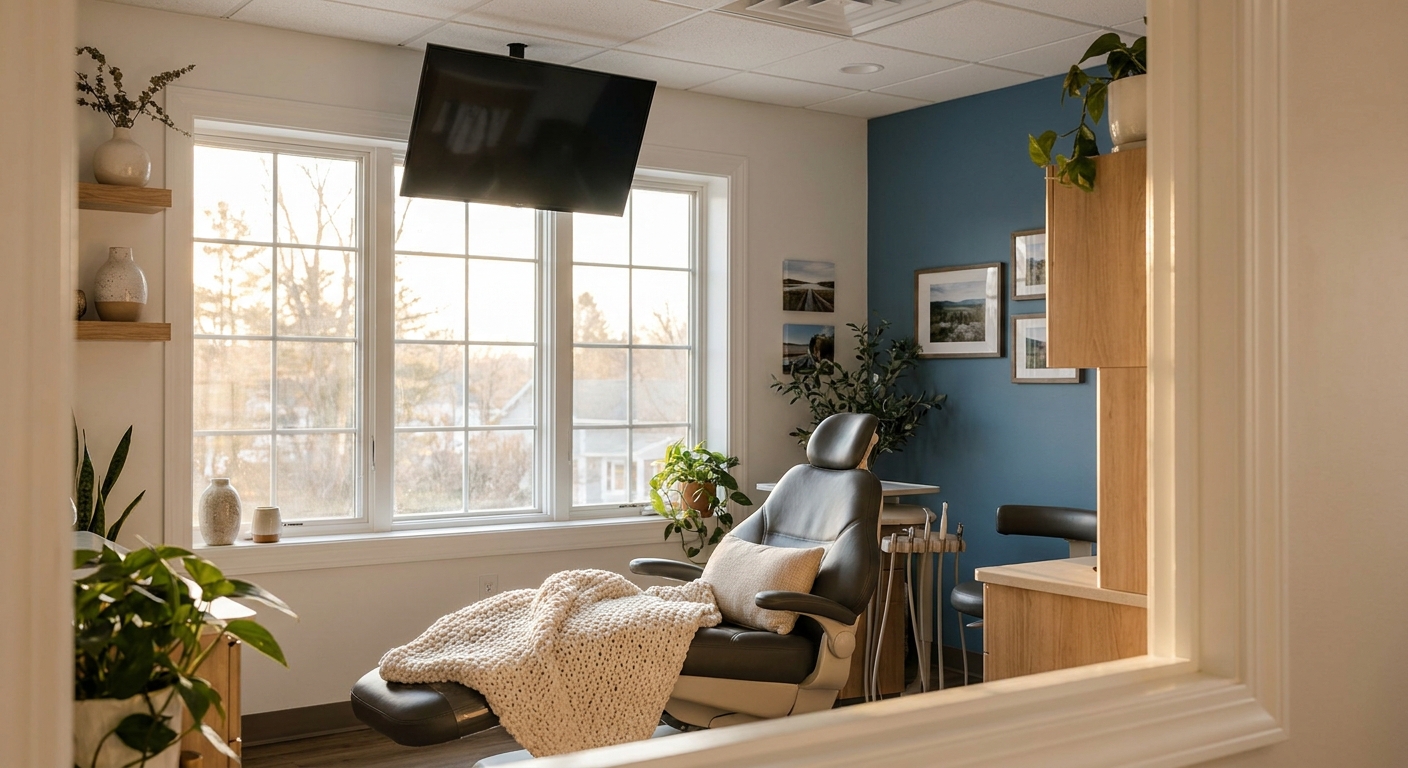
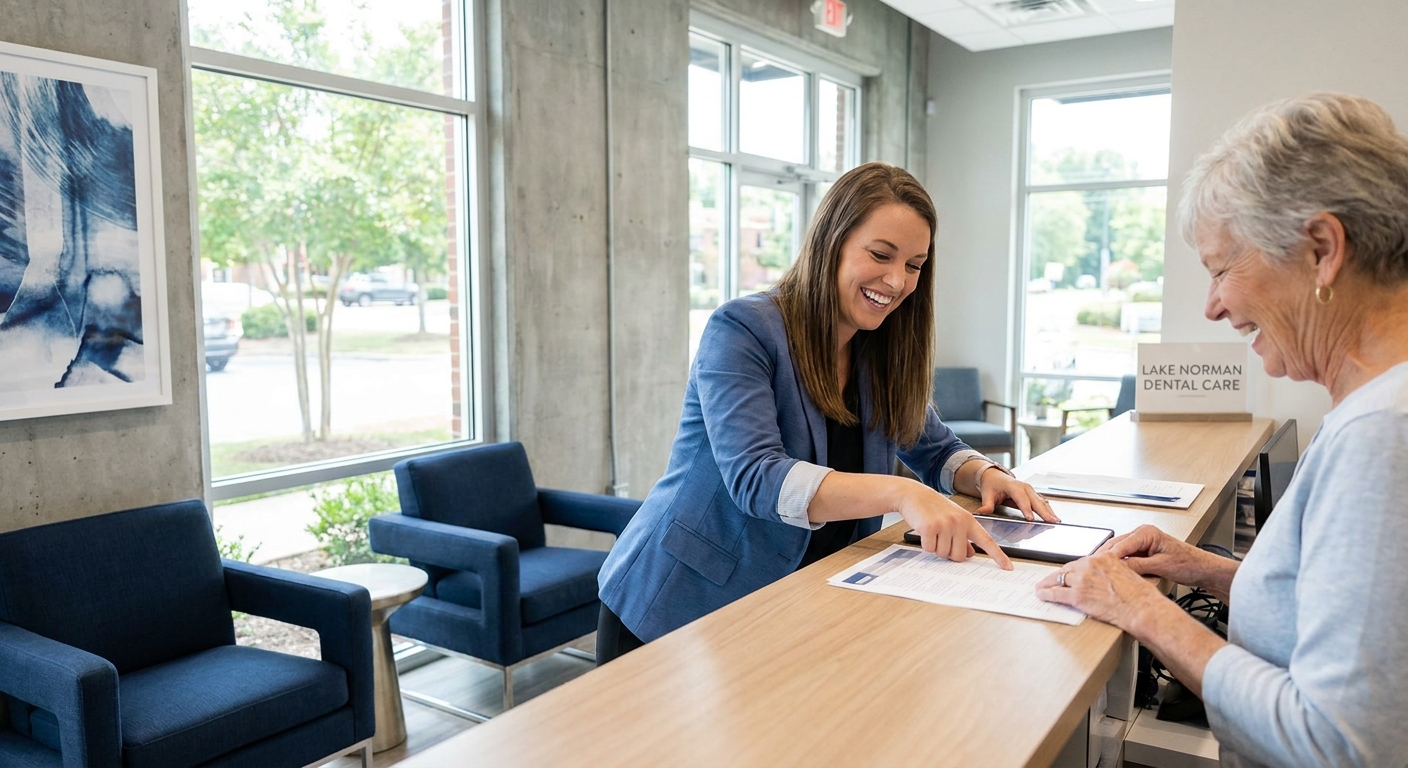
The comfort part starts before you even sit down. The front desk greets you with a smile and offers you water, and an assistant gives you a quick tour, sits you down, and talks with you before X-rays begin. The treatment rooms are set up for people who are nervous. There are no side counters covered in tools, because the instruments are kept behind the chair where you can’t see them. Every room has windows so it feels open, and there are TVs on the ceiling to watch once you lean back. You can ask for a blanket, headphones, or a weighted blanket, and you pick your own distractions.
Then the dentist sits facing you and makes eye contact. “I basically get to know their dental trauma,” Dr. Moshos says, meaning the specific moment or bad visit that made you dread this in the first place. If that’s you, you are not alone with this fear, it’s super common. For highly anxious patients, it can take 30 to 45 minutes just to get comfortable, and that time is part of the visit, not something we rush through.
Here’s how the sedation options work, from lightest to strongest:
- Nitrous oxide is offered first. It’s the easiest option, it wears off quickly, and you don’t need a driver.
- Oral sedation usually means Valium taken about an hour before treatment, or triazolam if you’d rather not remember much of the appointment. Nitrous and Valium can be combined. Unlike nitrous, oral sedation means you’ll need someone to drive you home.
- IV sedation is reserved for patients who need deeper sedation. It requires careful medical screening and specialized monitoring throughout the procedure, which is why it involves additional costs and carries more risk than the lighter options.
We actually try to talk people out of IV sedation and toward the lighter options first, because it’s about meeting the patient halfway. For bigger procedures with very fearful patients, the plan might start with IV sedation, then step down to Valium and nitrous, then just nitrous over the next visits, so you need a little less help each time.
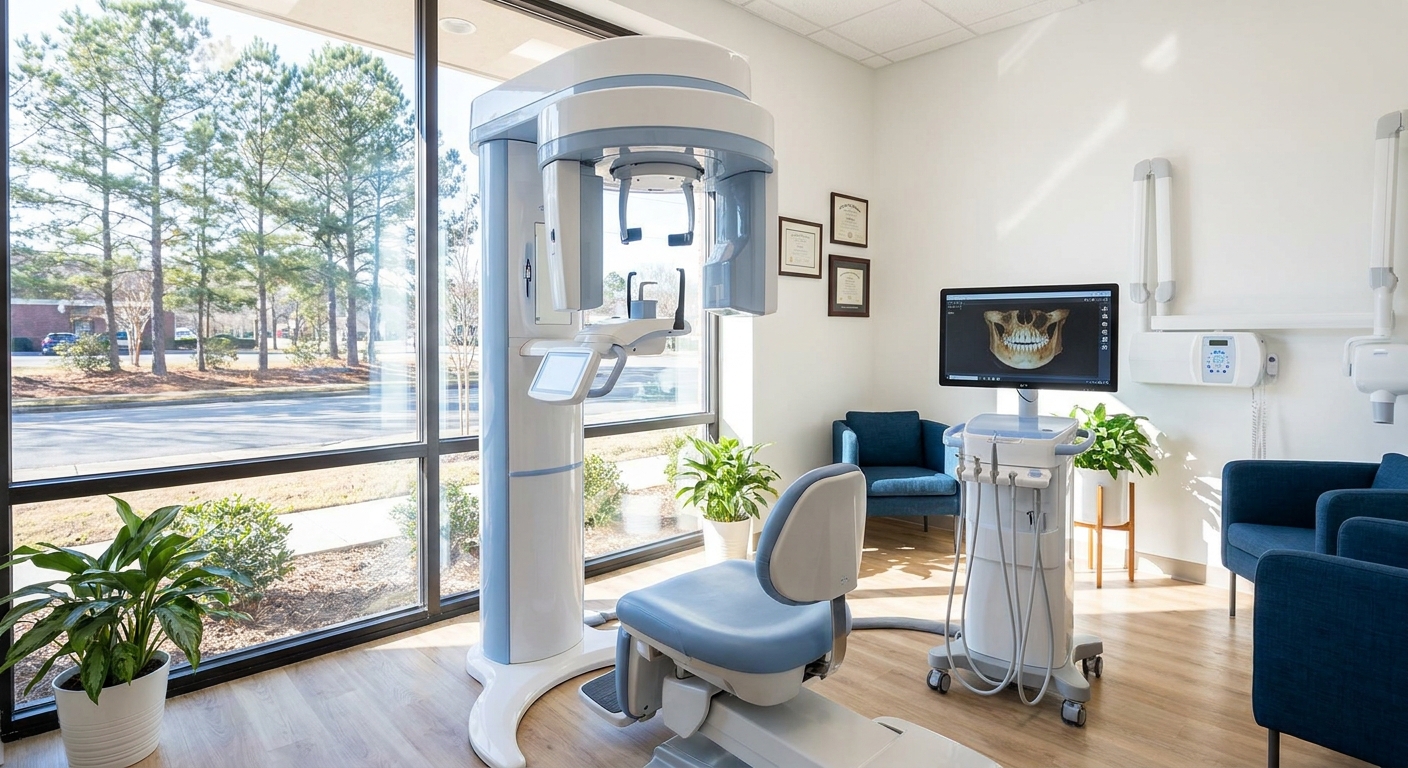
Extractions, abscess drainage, and pain management all happen right here in the office. That means you’re not getting a quick look and a referral somewhere else. The practice works to address your immediate problem or bring it under control during your visit.
Step 5: What Happens After You Leave, and Will You Need to Come Back?
After your same-day visit, most patients leave with their immediate pain or infection under control, though follow-up care is often needed to address the underlying issue, and the next step is pretty straightforward. Most same-day visits come with simple home-care instructions and, depending on what was done, one follow-up visit that’s scheduled before you walk out the door. You won’t have to call around later trying to figure out what comes next.
After an extraction, the basics are easy to follow. Bite down gently on gauze to control the bleeding, hold ice on the outside of your cheek in short sessions for the swelling, stick with soft foods for a few days, and take pain medicine exactly as directed. You’ll get written instructions for your specific case, because a simple extraction and a tougher one can heal a little differently.
After an abscess, the most important rule is to take your antibiotic exactly as prescribed, for as long as the dentist tells you, even if you feel better after two days. Warm saltwater rinses help keep the area clean. Keep in mind that antibiotics help manage the infection, but they don’t fix the tooth that caused it. That’s why abscess cases usually need a follow-up visit for additional treatment, like a filling, crown, or root canal, to address the underlying issue.
Extraction patients might need a quick visit to have stitches removed. Either way, the front desk books that appointment before you leave, while the plan is fresh and you’re already here. If questions come up once you’re home, patients of record can call and get talked through it. For general reading on tooth and gum health, Harvard Health’s dental health library is a good plain-language resource.
At Rivers Edge Dental, the goal is comfort-focused, personalized care that helps a patient who arrives scared or in pain feel more at ease over time, though every person’s experience and response to treatment is different.
Why Can an Independent Mooresville Office Get You In Today?
You might be wondering how one office can keep this kind of flexibility. It’s because the dentist who owns Rivers Edge Dental also controls its schedule. There’s no corporate scheduling office to ask for permission, so when the day needs an extra emergency slot or a later finish, that decision gets made right then.
That’s a real difference from many offices owned by large dental chains. In those offices, schedules are often run by a central team, with rules about how many slots go to each type of visit, and adding an emergency or staying late can mean going through layers of approval. At Rivers Edge Dental, which is independently owned, if three emergencies have already come in and a fourth person calls with a swollen face, the dentist can look at the day and decide whether to fit them in. That’s how the three-slot system stays flexible instead of turning into a hard cap.
It’s also why families all around Mooresville, NC call when they need a same day dentist. They want someone who can actually make a decision on the phone, look at their photo, and either get them in or help manage their situation promptly.
The emergency is usually just the first visit. Rivers Edge Dental is the whole family dentist, with pediatric care, cleanings, crowns, root canals, and sedation dentistry all at 604 River Highway, Mooresville, NC 28117. The same anxiety-free, comfort-focused approach and personalized care you get on a bad day carries over to your next cleaning. If you want to see what follow-up work can look like, the before-and-after gallery on the practice website shows real cases from the practice.
Questions Mooresville Patients Ask Before They Call
These are the questions the front desk hears most from people who need to be seen fast, with short answers below.
Can I get a same-day appointment if I’m a new patient?
Yes. Rivers Edge Dental keeps its same-day slots for both new patients and emergencies. If you call late and the slots are full, new patients are fit in the next morning, so the dentist can do a full exam before treating you.
What if I call after 3 PM and all same-day slots are filled?
Established patients can send a photo and may receive guidance or, in appropriate cases, an antibiotic prescription over the phone. New patients are scheduled the next morning. If you have swelling that affects your breathing or swallowing, go to the emergency room.
Does Rivers Edge Dental accept my insurance for same-day emergencies?
The practice accepts United Healthcare, Delta Dental, Aetna, Principal, and BlueCross BlueShield of North Carolina. The front desk checks your benefits and tells you your out-of-pocket cost before treatment begins.
Can I be sedated if I’m terrified of emergency dental treatment?
Yes. Options include nitrous oxide, oral sedation (Valium or triazolam), and IV sedation, matched to your anxiety level, your health history, and your budget. The dentist usually starts with the lightest option that may work for your needs.
Will I need to come back after a same-day emergency visit?
It depends on what was done. Extractions may need stitches removed, and abscesses often need additional treatment to address the underlying problem. Either way, the practice schedules your follow-up before you leave.
Why is an independent dental office faster for same-day emergencies?
Independent ownership means the dentist controls the schedule directly, so they can add emergency slots or work later without waiting for approval from a corporate office.
Call Rivers Edge Dental at (704) 663-3540 now to claim one of today’s three same-day emergency slots. If pain or swelling has already started, head to the office at 604 River Highway, Mooresville, NC 28117 as soon as the front desk confirms your time. If you’re looking for a same day dentist in Mooresville, NC, the one thing that most changes how fast you’re seen is calling before noon with your insurance card in hand and a photo ready to send, because that’s when all three chairs are still open.
When a Dental Emergency Strikes, Waiting Shouldn’t Be Your Only Option
If you’re dealing with sudden tooth pain, a broken crown, or any urgent dental issue in Mooresville, NC, you deserve care that fits your schedule, not the other way around. Rivers Edge Dental understands that dental emergencies don’t wait for convenient times, which is why we make room for same day appointments whenever possible. Give our office a call to explain what’s happening and let us get you out of discomfort quickly.
The patient experiences described in this article are individual cases, not typical results. A same-day emergency visit is designed to address immediate pain or infection, and how quickly you feel relief and what follow-up care you may need depend on the severity of your condition, the treatment performed, and your overall oral health. Our comfort-focused team will walk you through what to expect for your personalized care plan.