Expertise provided by Dr. Moshos, Owner
Looking for a “Dentist Near Me” in Mooresville? How to Choose the Right One
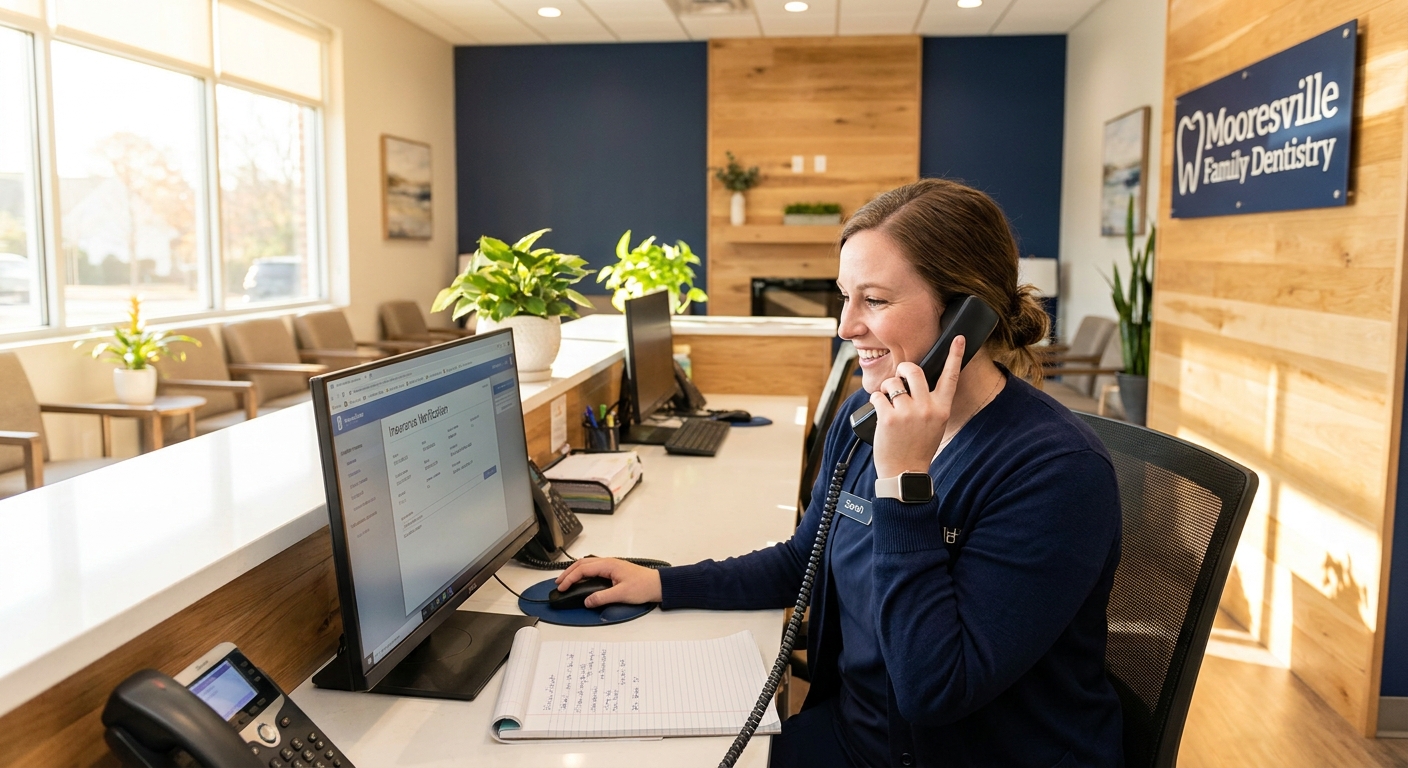
A front desk can usually tell someone is anxious the moment they call, and at Rivers Edge Dental every team member is trained to note “patient has a fear of the dentist, hasn’t been in a while” so that from that first phone conversation all the way through the appointment, every interaction is calming on purpose, because the practice knows that for many people in Mooresville the hardest part of finding a dentist isn’t the distance, it’s walking through the door. So if you just typed “dentist near me” into your phone and got twenty offices within ten minutes, know this: the closest pin on the map is rarely the right answer. What actually matters is whether that office takes your plan, can see you when a crown breaks, respects your fear instead of brushing it off, and has the training to do the work you’ve been putting off. This guide walks you through exactly how to select the right one.
Why the Closest “Dentist Near Me” Isn’t Always the Right Fit
The nearest office may not serve you well if it can’t take your insurance or can’t see you when you’re in pain. A dental office five minutes from your house that doesn’t accept your plan, or can’t fit you in when a crown pops off on a Saturday, may be less accessible than one you’d drive fifteen minutes to reach.
That’s the challenge with a map search. It sorts by distance, not by whether the office actually solves your problem. Some people in Mooresville may find it worthwhile to drive a little farther to a location that fits their real needs, and the two needs that trip people up most are emergency access and insurance.
Rivers Edge Dental holds same-day emergency slots every single day, on purpose, so a Mooresville patient may not need to spend a whole weekend nursing a throbbing tooth waiting for Monday to roll around. That’s a scheduling decision the practice made because tooth pain doesn’t wait. On the insurance side, Rivers Edge accepts United Healthcare, Delta Dental, Aetna, Principal, and BlueCross BlueShield of North Carolina. Put those two things together and an office at an address a few minutes down the road may be more accessible in practice than the one right around the corner in your city that can’t take your plan or can’t get you in.
Before you pick based on proximity, ask yourself what you’d actually need from this office on your worst day, not your easiest one. Good oral health can benefit from steady, ongoing care, and the CDC notes that regular dental visits are part of preventing the most common oral diseases. A dentist you can only reach when it’s convenient for them may not support you in maintaining that routine.
What to Ask About Insurance and Payment Before You Book
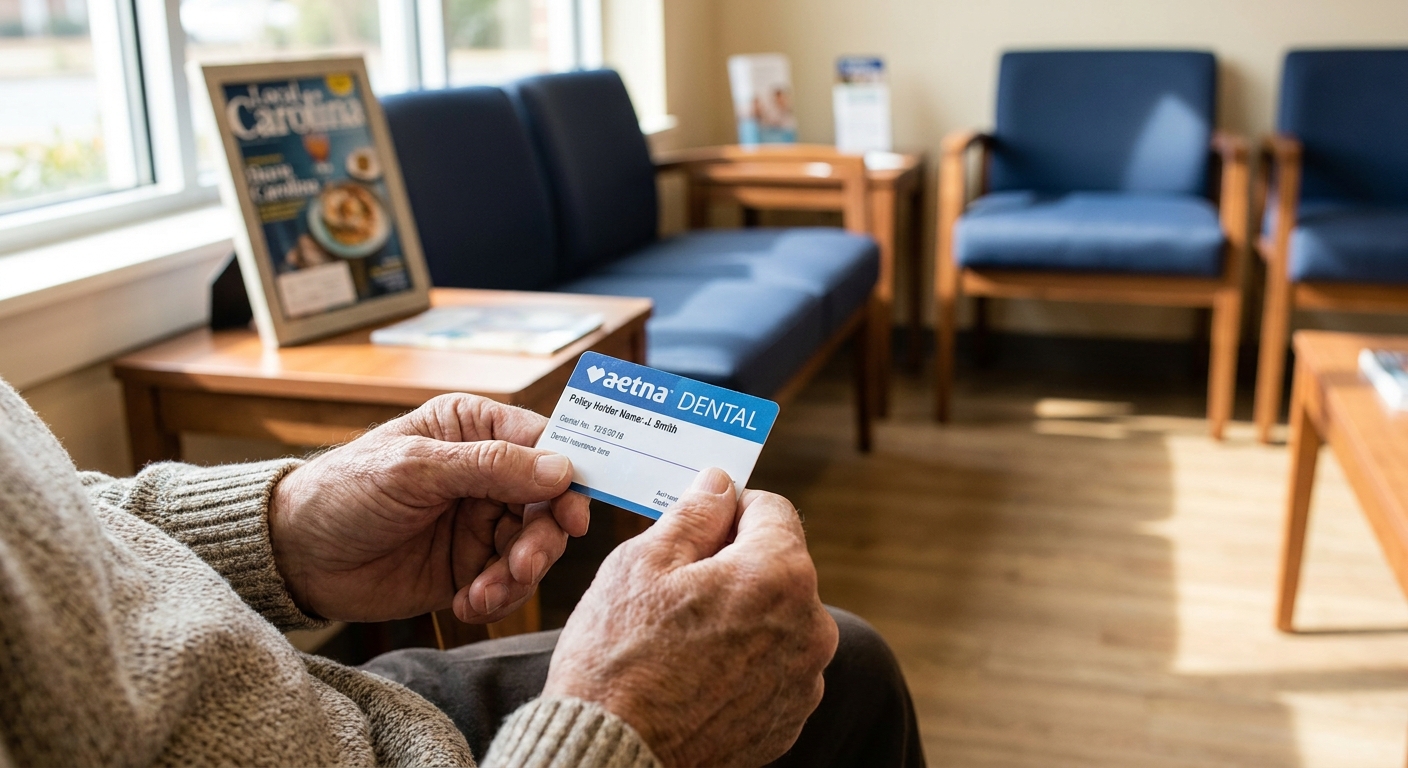
Ask straight out whether the office accepts your specific plan and whether they’ll verify your coverage before your visit, not after. The word “accepts” and the word “in-network” are not the same thing, and the difference can affect your out-of-pocket costs.
Here’s why it matters. Some Mooresville folks get their dental benefits through big regional employers, and those companies often contract with plans like Delta Dental or United Healthcare. Delta Dental, for instance, offers several plan types—DeltaCare USA, Delta Dental PPO, and Delta Dental Premier—and your cost can depend on which one you carry and whether the dental office falls inside that plan network. Rivers Edge accepts those plans, and the front desk can check your current network status for you before you ever sit in the chair. That check is worth doing, because in-network status may reduce the cost of something like a crown compared to what you’d get reimbursed out-of-network, even though being in-network isn’t required for you to be treated.
So when you call, don’t just ask “do you take insurance.” Ask three things: Do you accept my plan by name? Will you verify my coverage and give me an estimate before treatment? And what are my payment options if a procedure isn’t fully covered? An office that answers those clearly is showing you they respect your budget, and an office that dodges them is telling you something too.
Cost is one of the reasons people delay care, and delaying dental care can sometimes make both the problem and the price bigger. The point of asking upfront is so you’re never blindsided by a bill you didn’t see coming.
How to Verify a Dentist’s Credentials and Clinical Training
Look past the framed awards on the wall and ask where the dentist actually trained for the procedures you need. A residency and years of hands-on mentorship can tell you more than a plaque that anyone can buy.
There’s a real difference between marketing and substance here. Anytime a dentist offers sedation or complex restorative work, you want to know how they learned it and how they keep you safe while doing it. The honest ones will tell you plainly.
The dentist at Rivers Edge completed an Air Force AEGD residency, which is what qualified them to provide sedation in the first place. On top of that, they spent four years working directly under oral surgeons, so it wasn’t just classroom training, it was four more years of real mentorship on the exact protocols used in surgical settings. That means monitoring blood pressure, heart rate, and CO2 every five minutes throughout the procedure, and using the same versed-and-fentanyl combination oral surgeons rely on. As the dentist puts it, “I literally use the exact same protocol,” and they keep doses conservative, never more than 5 mg. That depth of sedation training is uncommon in a general practice.
You can also verify any North Carolina dentist’s license through the state dental board, and it’s a fair question to ask an office directly. A dentist who is proud of their training will happily tell you where they got it.
Evaluating Sedation Options If You’re Anxious or Haven’t Been in Years
Not every office that advertises “gentle” or “comfort-focused” dentistry actually offers clinical sedation beyond laughing gas. If you’ve avoided the dentist for years because of fear, the sedation menu and the monitoring behind it may determine whether you can finally get the treatment you need.
Sedation runs on a scale. Nitrous oxide, the laughing gas, is the lightest and wears off fast. Oral sedation, using something like Valium or triazolam, goes a step further. IV sedation is the deepest and may allow an anxious patient to sleep through hours of work in a single visit. The right level depends on you.
At Rivers Edge, the choice starts with a conversation. The dentist looks at whether you’ve been sedated before, what your biggest fear actually is (whether it’s the noise or the pain), and then decides whether you can start with something lighter like nitrous or may need something stronger like IV sedation. Your medical history matters too. IV sedation is reserved for healthier patients, and nitrous is the safer route for younger children or anyone medically complex, as long as nothing rules it out.
Why does this matter? Because a dentist’s sedation credentials and monitoring setup directly affect whether you can finish years of deferred work in one or two visits instead of stretching it out over months. You are not alone with this fear, it’s common, and the right practice treats it as a starting point, not something to talk you out of.
What the Office Environment Reveals About Anxiety Care
The room itself can show you whether anxiety care is a slogan or something the practice actually built. Look at where the tools are, what’s on the counters, and what the office lets you control.
Fear often lives in the details. The tray of instruments in your line of sight, the drill sound, the sterile view out a window facing a parking lot. Those little things can stack up for someone who’s already nervous, and an office that hasn’t thought about them may not have thought much about you either.
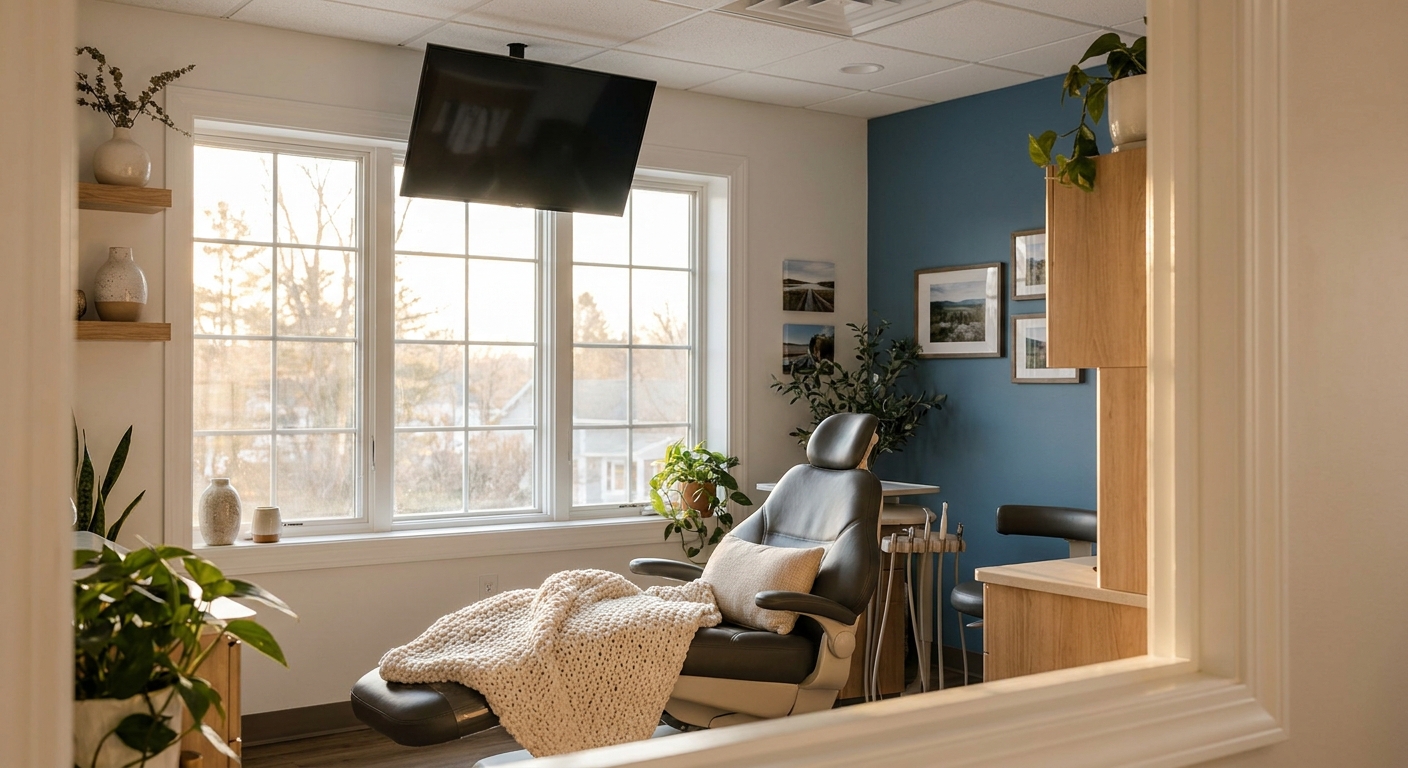
Rivers Edge set up every operatory so nothing visible sets you off. Tools are stored behind the chair, there are no instrument trays sitting out on side counters, and the windows face trees instead of asphalt. When you’re seated, you get a blanket, the chair leans back, and you get the remote to pick a show on a ceiling-mounted TV with headphones, all before any work starts. That happens only after the team has talked you through the procedure so you know exactly what’s coming that day.
That kind of setup isn’t cheap or accidental. It shows that calming anxious patients is built into the physical space, not just promised on the website. The National Institute on Aging points out that fear and anxiety keep many people from getting the dental care they need, so a room designed around that fear can be a genuine signal, not a gimmick.
Understanding What a Practice Does In-House Versus Refers Out
Ask what the office does under its own roof and what it sends elsewhere, then trust the ones who answer honestly. A dentist who is upfront about their limits is telling you they put your care ahead of keeping your case.
Scope matters because it decides whether you’ll juggle several providers or stay in one place for most of your care. It also tells you whether the office is being straight with you.
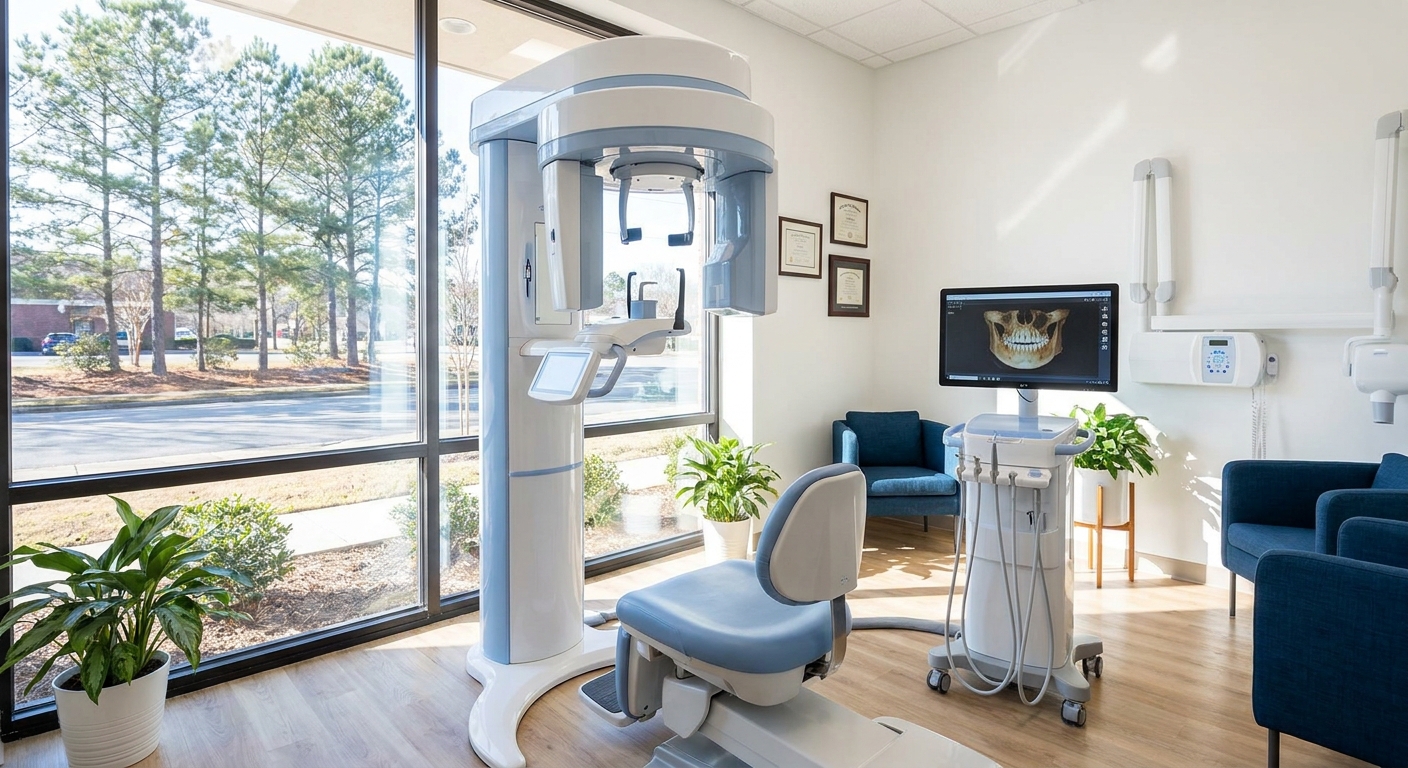
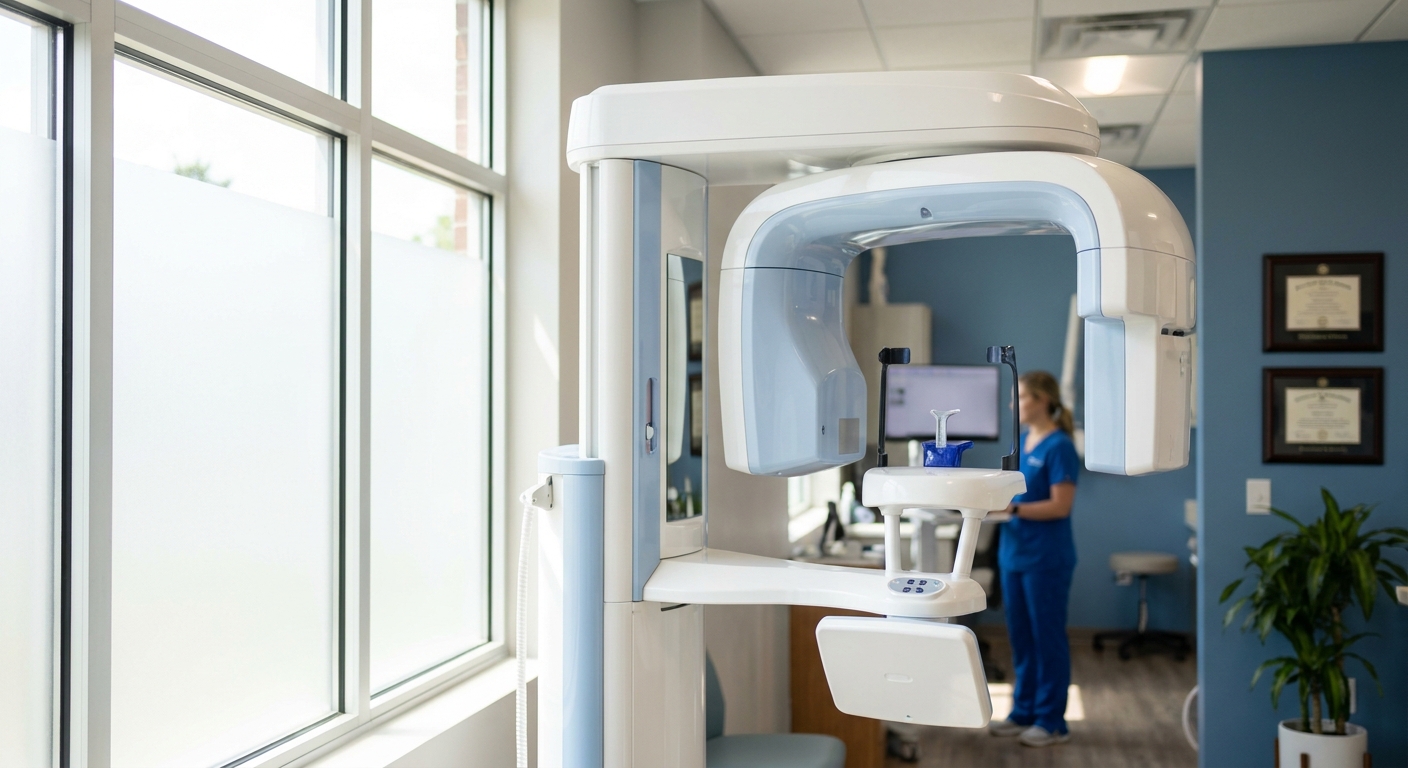
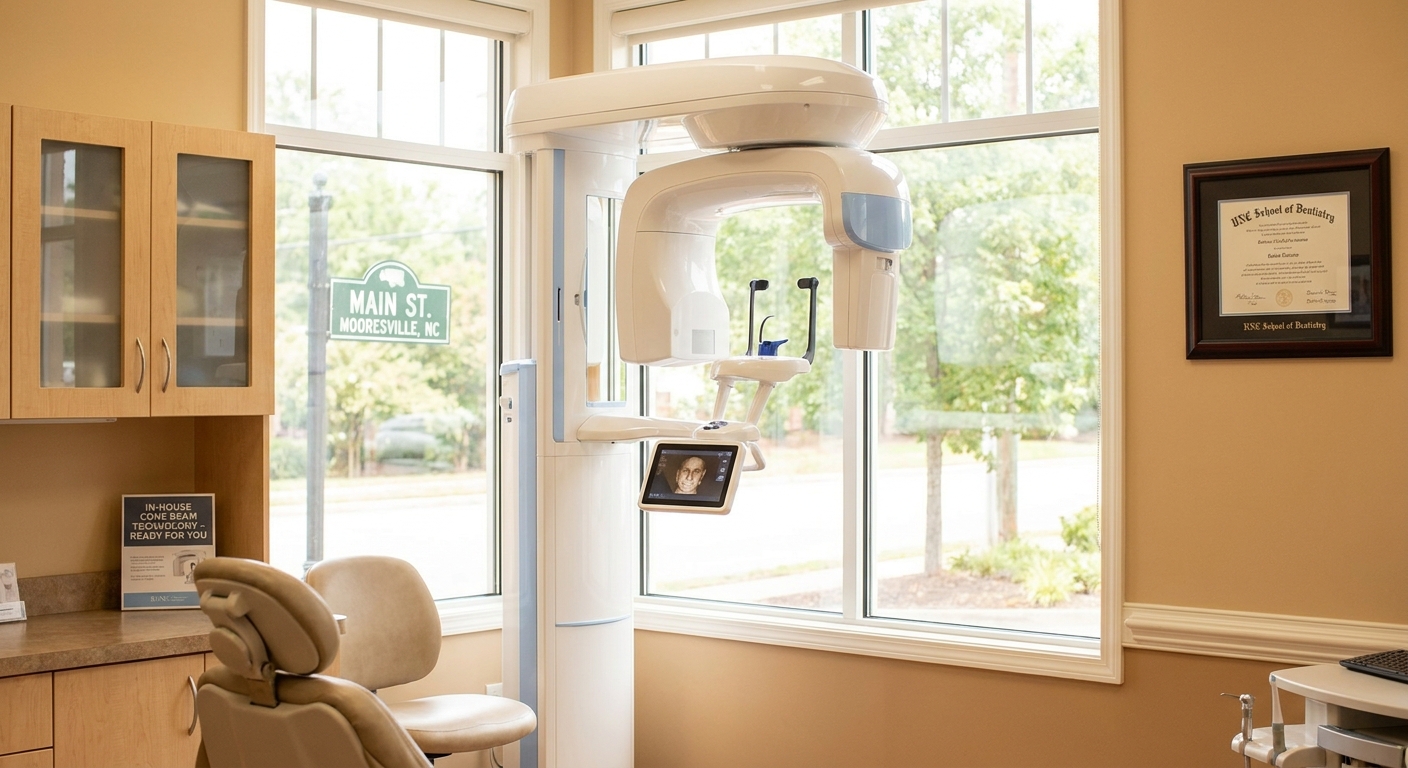
Rivers Edge handles a lot in-house: single-tooth implants, implant bridges, lower two-implant snap dentures, crowns, root canals, cosmetic veneers, bonding, whitening, smile makeovers, and full mouth reconstruction. What they don’t do in-house, they say so plainly. Complex cases where most teeth are missing get referred to specialists. And the handoff isn’t a shrug at the front desk. The dentist reviews a CBCT scan with you, measures your ridge width and height, and shows you whether your bone can support placement here or whether a specialist may be a better option. As the dentist explains it, if there’s enough bone for two implants, they’ll take the case; if not, they refer.
That honesty is the point. A practice that promises everything and quietly refers common work out is different than one that draws a clear, imaging-based line and explains it to you.
Why Independent Practices Often Offer More Flexibility Than Corporate Chains
An independent, dentist-owned practice may have more room to plan treatment around you because there’s no corporate quota pushing case acceptance. The person deciding your treatment is the same person doing the work.
In a corporate chain, clinical decisions sometimes bump up against production targets set somewhere far away by the parent company. That pressure can shape whether you get recommended a crown you may not need, how long you get in the chair, and how quickly they can squeeze in an emergency. It’s not that every chain is problematic, it’s that the structure pulls in a direction that isn’t always yours.
Rivers Edge is independent and non-DSO, which means the owner-dentist decides your treatment plan and answers to you, not a corporate scorecard. That dentist is known among referring patients for recommending crowns only when they’re truly needed, not to hit a number. “I basically just tell them how it is, I’m not gonna upsell anything” is the working philosophy, and it’s part of why the practice can hold daily emergency slots and take the time an anxious patient needs. A strip-mall chain may not match that, because the protocols aren’t set by the person sitting across from you.
When you’re choosing, ask who owns the practice. It’s a fair question, and the answer shapes much about how you’ll be treated.
How to Recognize Proof of Outcomes Over Generic Reviews
A specific case, a referral from another dentist, or a patient who came back after years of avoidance can tell you more than a wall of five-star ratings. Anyone can collect stars. Real proof has details.
Star averages can be gamed and padded. What you want to see is evidence the office can actually handle hard cases and difficult fears, and that shows up in stories with real specifics.
Here’s one patient’s experience. A Mooresville teacher had worn his teeth down and was referred to Rivers Edge because his previous dentist didn’t offer sedation and felt the roughly sixteen crowns he needed simply couldn’t be done there. Rivers Edge did the work using IV sedation for both the crown prep and the delivery appointments. Over time, that patient needed less and less sedation, and eventually he finished an extra crown with none at all. Today he’s one of the practice’s most vocal happy patients. That’s a concrete story about one individual, and it may be more credible than a generic thumbs-up online. Ask for a before-and-after gallery too, since Rivers Edge keeps case photos you can look at.
When you read reviews, hunt for the ones that name a real problem and a real approach. Those are the stories that may mean something.
Questions to Ask When You First Call
Ask five things on that first call: Do you hold same-day emergency slots? What sedation is the dentist credentialed to provide? Do you verify my insurance before my visit? What do you do in-house versus refer out? And how do you handle patients who are anxious?
Rivers Edge answers all five plainly. Yes, same-day emergency slots every day. Sedation from nitrous to oral to IV, backed by a residency and four years under oral surgeons. Insurance verified before you come in, not billed as a surprise afterward. A clear, CBCT-based line on what stays in-house. And a front desk that notes your anxiety in your chart the moment you call, so the whole clinical team knows to be extra calming from the second you walk in.
Write those questions down before you dial. The way an office answers them, quick and clear or vague and defensive, can tell you much of what you need to know.
Red Flags That Should Send You to a Different Practice
Walk away when an office dismisses your fear, pushes payment before diagnosis, or can’t answer basic credential questions. Those can be signs the practice cares more about signing patients up than doing careful work.
A receptionist who waves off your anxiety with “everyone’s nervous” instead of writing it in your chart isn’t respecting your comfort. An office that wants a full payment plan signed before anyone explains what it’s actually treating has the order backwards. And a practice that advertises every service under the sun but quietly refers out common cases may be selling a menu it can’t cook from. If your “dentist near me” search turned up an office like that, it may be more focused on filling chairs than doing the work right.
Trust your gut on the phone. The right practice earns your confidence before you ever open your mouth.
Common Questions Mooresville Patients Ask
What should I ask a dentist’s office before booking my first appointment?
Ask whether they accept your insurance, hold same-day emergency slots, offer sedation, what they do in-house versus refer out, and how they handle anxious patients. The clarity of the answers can tell you a lot before you ever visit.
Does Rivers Edge Dental accept my insurance?
Rivers Edge accepts United Healthcare, Delta Dental, Aetna, Principal, and BlueCross BlueShield of North Carolina. Delta Dental alone spans several product types, from DeltaCare USA to Delta Dental PPO and Premier, so call to verify your specific plan and coverage, and the team can check your current network status before you book.
What sedation options are available for anxious dental patients in Mooresville?
Sedation ranges from nitrous oxide to oral sedation with Valium or triazolam to IV sedation. Always verify the dentist’s training and monitoring protocol, because not every office offers clinical sedation beyond nitrous.
How do I know if a dentist can handle complex or deferred dental work?
Ask about their residency training, years of experience with your specific procedure, what they keep in-house versus refer out, and request a case example. A dentist who reviews a CBCT scan with you is showing real, imaging-based judgment.
What’s the difference between an independent practice and a corporate chain?
An independent, owner-run practice may offer more flexibility in treatment planning, scheduling, and clinical decisions, because the dentist controls operations without a parent company’s case-acceptance quotas influencing those choices.
Can I get a same-day emergency dental appointment in Mooresville?
Rivers Edge Dental holds same-day emergency slots every day, on purpose, so you may not need to spend a weekend in pain. Call early for availability.
If your search for a “dentist near me” has you comparing a dozen offices, start with the one that answers your questions straight. Call Rivers Edge Dental in Mooresville, NC today to verify your insurance, ask about sedation options, and schedule a consultation where the team will walk you through exactly what to expect before any treatment begins.
Find Your Dental Home in Mooresville
Searching for the right dentist doesn’t have to feel overwhelming when you know what matters most to your oral health. Rivers Edge Dental welcomes new patients who want a practice that listens, explains options clearly, and makes quality care accessible. If you’re ready to schedule a visit with a team that puts your comfort first, we’d be glad to hear from you.
Individual outcomes, experiences, and responses to treatment vary; every patient’s case, healing, and comfort level are different.