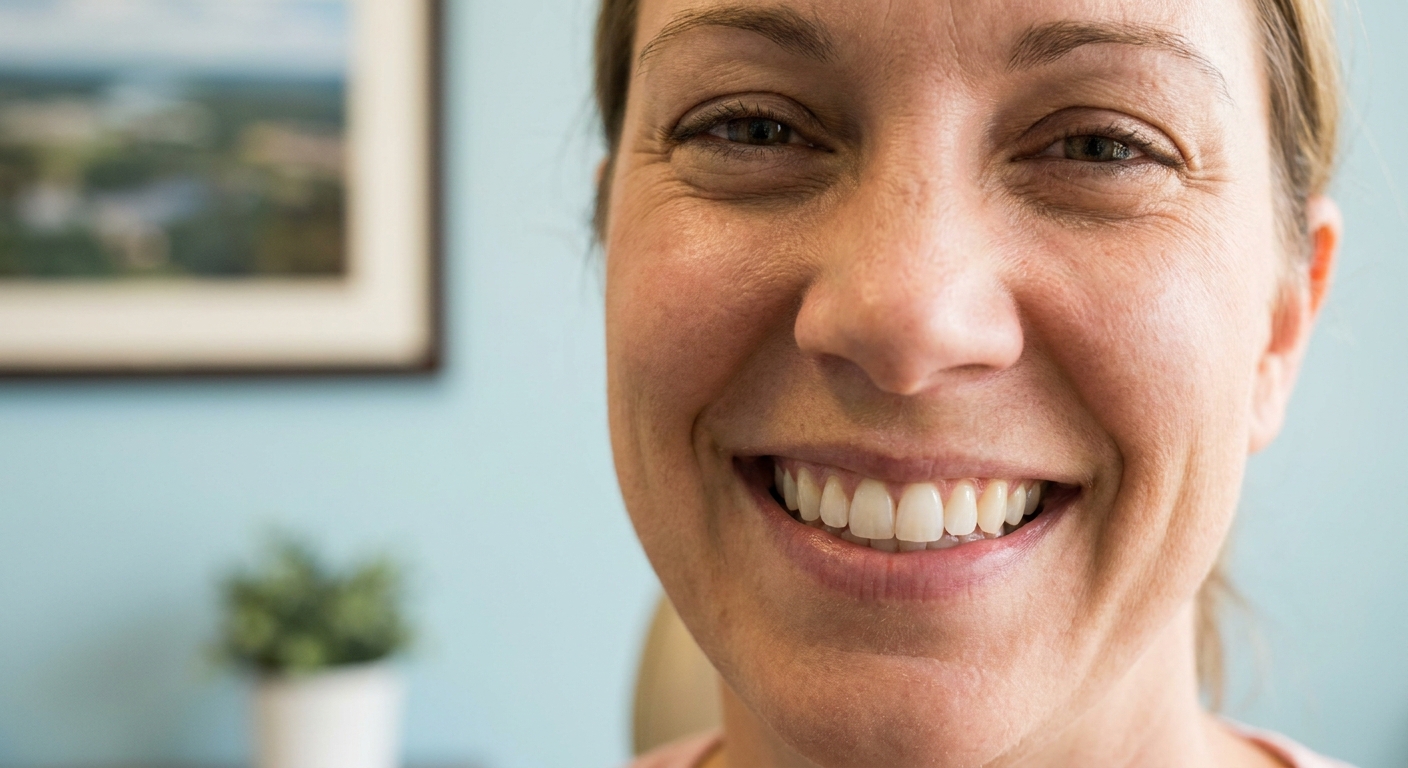
Expertise provided by Dr. Moshos, Owner
Dr. Ann Marie Moshos has placed implants at Rivers Edge Dental for a patient in their 80s. That surprises a lot of people who assume they’ve aged out of the option. The things that actually decide whether you’re a candidate have nothing to do with how many birthdays you’ve had. So if you’ve been typing “dental implants near me” late at night and quietly wondering whether you’re too old, too nervous, or too far behind on your teeth to even ask, this page is for you. We’re just gonna tell you how it is: what can rule you out, what implants cost, how long the whole process takes from start to finish, and which cases Rivers Edge Dental handles in our Mooresville office versus which ones go to a specialist.
At Rivers Edge Dental, Dr. Moshos puts it simply: age typically doesn’t matter. What matters is what the plan involves, you know, whether we’re replacing one tooth or whether you need multiple teeth replaced. That second question changes everything about cost, time, and who should do the work, so that’s where we’ll start.
Searching Dental Implants Near Me? What Is an Implant, and How Does It Work?
A dental implant is a small post, usually titanium, that replaces the root of a missing tooth. Your jawbone grows around the post and locks it in place. After that, it can hold a crown that looks, feels, and chews much like a natural tooth, though individual experiences vary.
The process has three parts. First is the implant itself, which Dr. Moshos places into the jawbone where the old tooth’s root used to be. Next comes a connector piece called an abutment. Last is the crown, which is the part you actually see when you smile. The real work happens in a step you can’t see at all: over a period of months, the bone fuses directly to the implant surface. Dentists call that osseointegration, and the NIH’s StatPearls overview of dental implants explains it as the foundation of whether an implant succeeds long term. It’s also why implants take time. Nobody can rush bone.
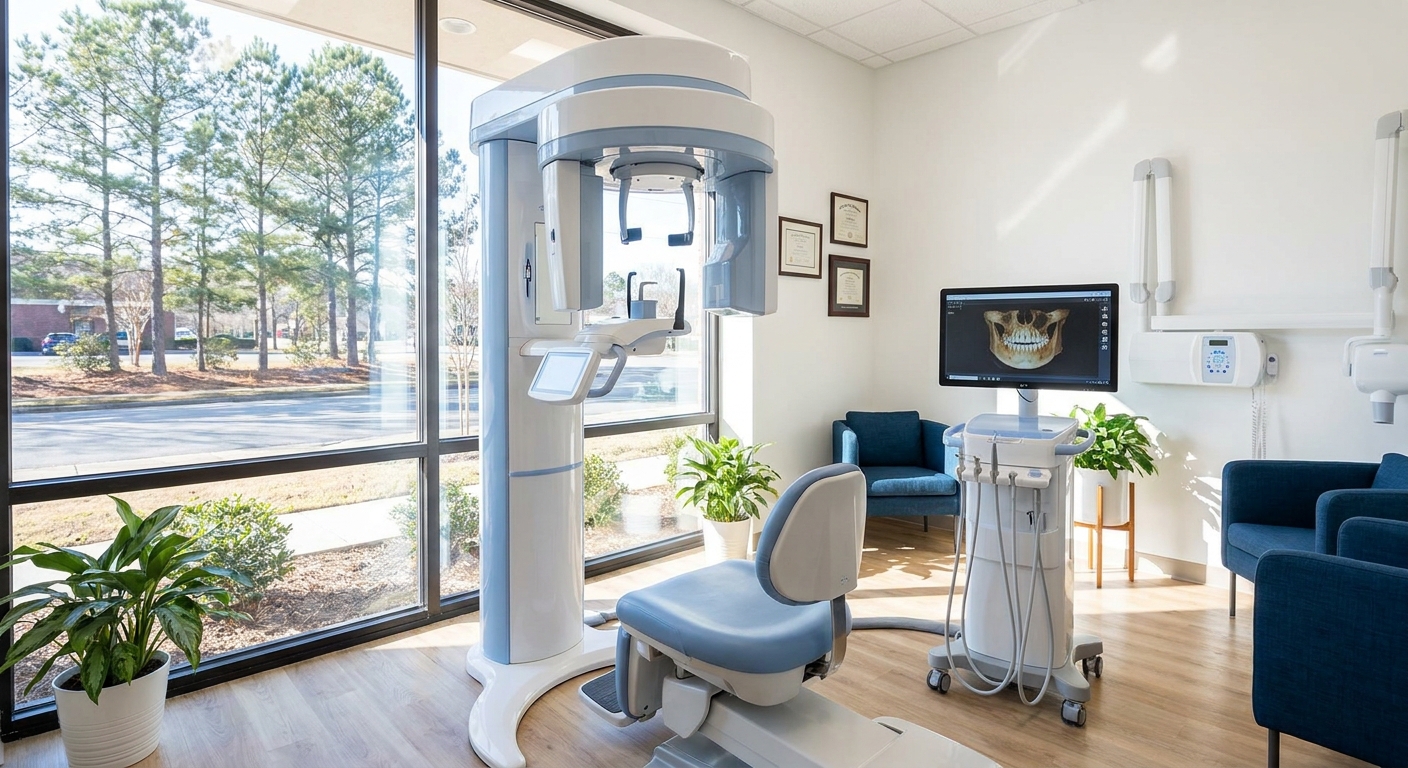
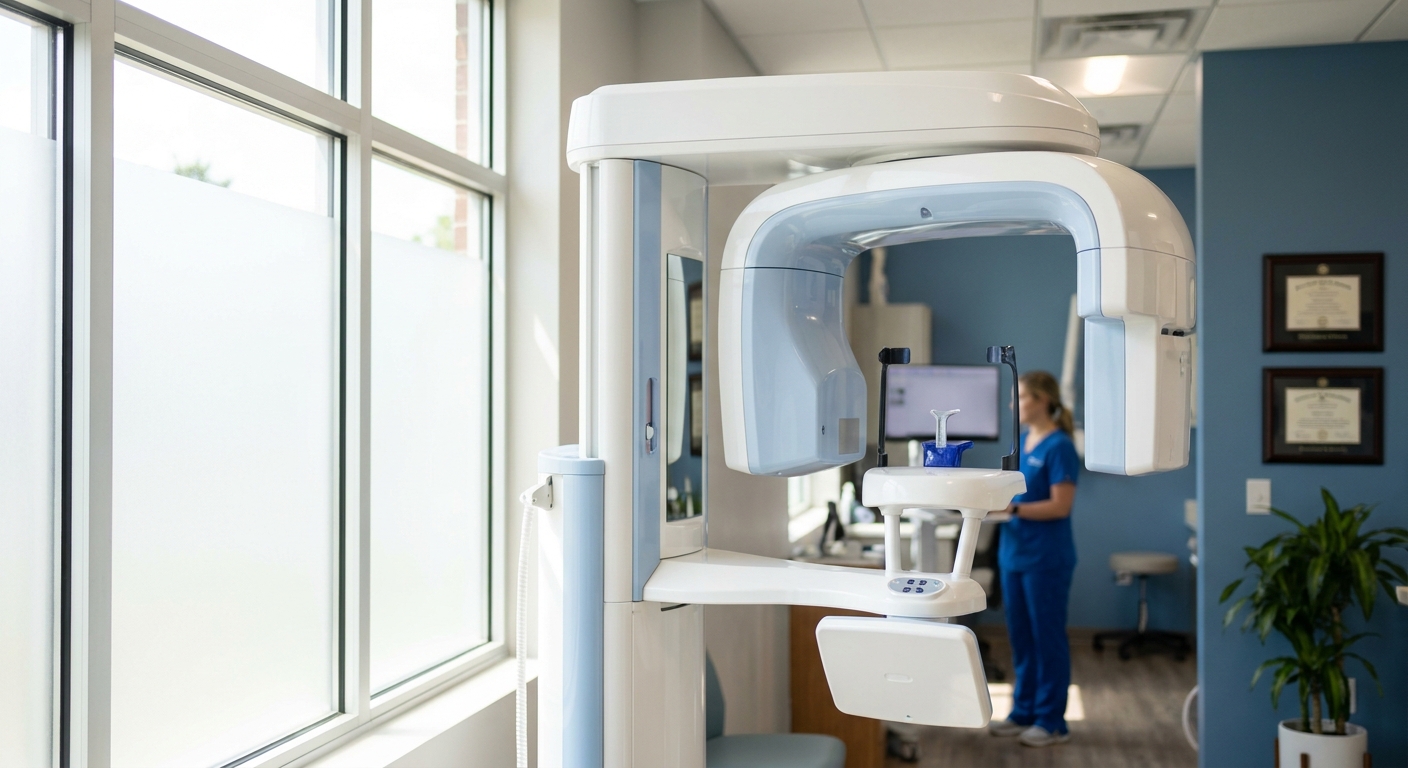
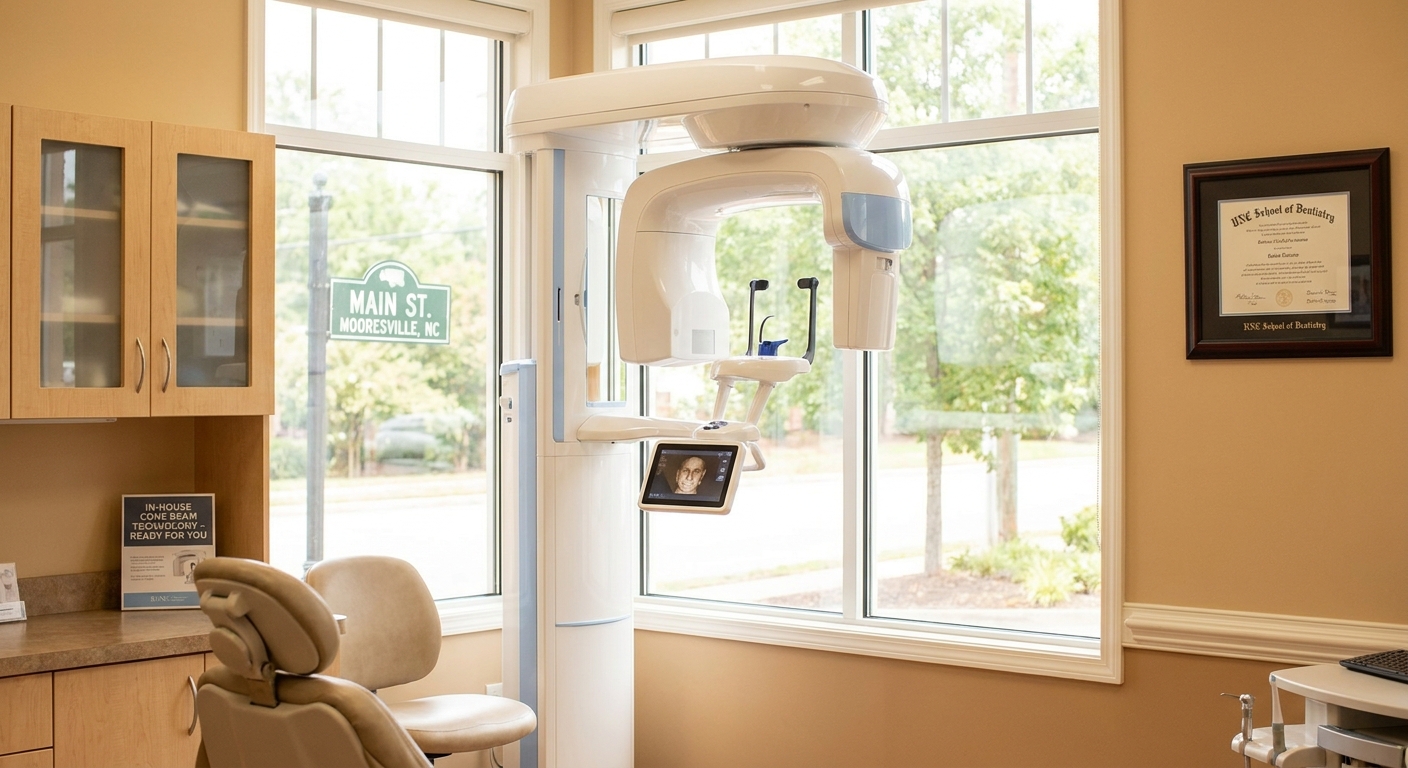
Here’s the part most offices don’t say out loud. At Rivers Edge Dental, single-tooth implants are the cases we handle in-house, along with the tooth extractions and bone grafting that often have to come first. Bigger cases go to a trusted specialist. That includes full-arch and full-mouth implant work, patients who are missing all their teeth, same-day front tooth implants, and the more complex cases that need zygomatic implants. We’re not gonna upsell you into something that belongs in a specialist’s chair. We’d rather you know where you stand before you ever drive over.
If you’ve had a rough time at a dental office before, you are not alone with this fear, it’s super common. Rivers Edge Dental is built around comfort-focused, anxiety-free dentistry, and nitrous oxide and oral sedation are both options during implant visits. Before any treatment starts, Dr. Moshos basically gets to know your dental concerns, so the visit can be planned around what actually makes you nervous. For more background reading, Harvard Health’s guide for people who have lost a tooth covers the same basics in plain language.
What Actually Disqualifies You from Getting Dental Implants in Mooresville?
Very few things are a flat “no.” At Rivers Edge Dental, the factors that can make implants a poor fit are uncontrolled diabetes, smoking, weak or missing bone, and a history of radiation treatment. Age by itself is not one of them.
When Dr. Moshos reviews whether someone is right for implants at Rivers Edge Dental, these are the things on the checklist:
- Uncontrolled diabetes. Dr. Moshos looks at your A1c, and an A1c below seven is often considered favorable for implants, though individual health factors vary. If your number runs higher than that, the conversation may shift toward getting it under control first.
- Smoking. Smoking isn’t an immediate disqualification. But Dr. Moshos will be upfront that it can affect implant outcomes, so you can weigh that risk honestly.
- Bone quality. An implant needs solid bone to fuse to. If the bone isn’t there, grafting may help, or another option may make more sense for your situation.
- Past radiation. If you’ve ever had radiation treatment, that history is part of the evaluation. The StatPearls review also lists radiation and uncontrolled diabetes among the conditions dentists weigh before placing implants.
- Age, which is not a disqualifier. Dr. Moshos has placed implants for a patient in their 80s.
This list matters because a lot of people rule themselves out before anyone ever looks at their mouth. Maybe you’re a smoker and figured that was the end of it, or you’ve got type 2 diabetes and assumed nobody would touch you. I mean, the honest answer is that it depends, and the only way to know is to look at your actual numbers and your actual bone.
Picture someone in their 70s with diabetes who smokes a few cigarettes a day and is missing a lower back tooth. That person isn’t automatically out. Dr. Moshos would want to see a recent A1c, talk frankly about what smoking does to implant outcomes, and check how much bone is left where the tooth used to be. From there, the plan gets built around you, not around a blanket rule. That’s what personalized care looks like when it’s applied to an implant decision.
How Much Do Dental Implants Cost?
The cost of a dental implant depends on how many teeth you’re replacing and what has to happen before the implant goes in. A single tooth with healthy bone costs far less than a case that needs an extraction and a bone graft first, and full-mouth cases sit in a completely different price range. Here’s how that breaks down at Rivers Edge Dental.
How Much Do Dental Implants Cost in Mooresville NC?
The cost of a single implant at Rivers Edge Dental in Mooresville depends on what your case needs, especially whether the tooth has to come out and the site has to be bone grafted first. Your exact number comes from an exam and a comprehensive treatment plan, so you know your out-of-pocket cost before anything starts.
So let’s walk through what goes into that price. A single-tooth implant is really a series of steps: the extraction if the tooth is still there, the bone graft if the site needs rebuilding, the implant itself, and then the crown on top. Someone who lost a tooth years ago and still has healthy bone will skip some of those steps. Someone with a cracked, infected tooth that needs to come out today will need all of them. Same goal, very different total.
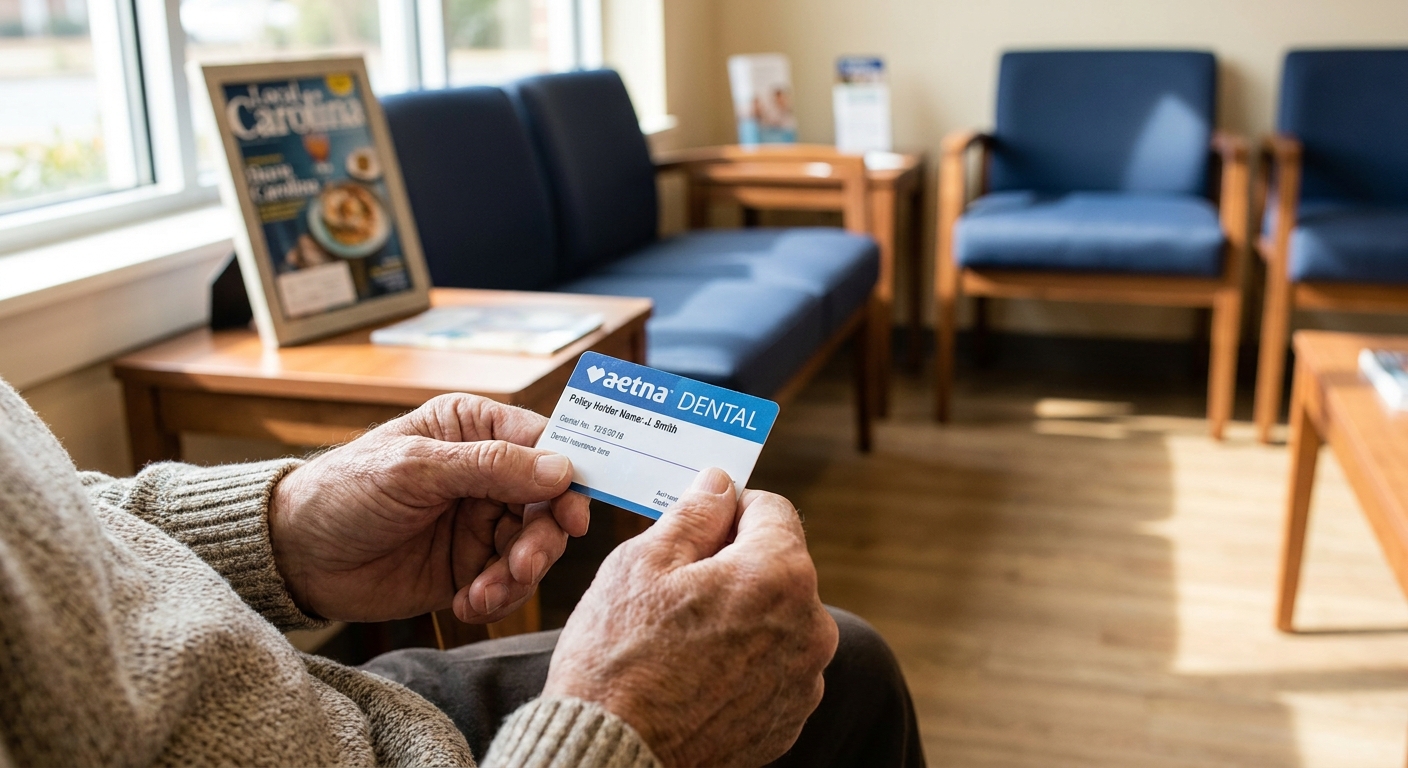
Rivers Edge Dental accepts Aetna, Blue Cross Blue Shield of North Carolina, Delta Dental, Principal, and UnitedHealthcare. Every plan treats implants differently, and some limit or exclude them, so it’s worth calling and asking the team to check your plan’s major-service benefits before your consult. Here’s one thing a lot of people miss. A single implant case at Rivers Edge Dental often takes about seven months from extraction to the final tooth, so the treatment can land across two plan years. Asking whether to phase it so you can maximize both years of benefits is a smart question to bring to the consult.
How Much Does a Full Set of Implants Usually Cost?
A full set of implants costs far more than a single tooth, and the most complex cases can reach $80,000 to $100,000. Dr. Moshos points to cases involving zygomatic implants as the ones at that top end.
Those full-arch cases are not done at Rivers Edge Dental. When someone needs a full mouth of implants or zygomatic placement, we refer to a specialist who focuses on that work. Dr. Moshos is candid that, realistically, not everyone can afford $80,000 to $100,000 in implant treatment, and that’s exactly why the options don’t stop at implants. Dentures and partial dentures are part of what Rivers Edge Dental offers, and for some people they’re the right answer both clinically and financially.
How to Get Implants If You Can’t Afford Them?
If the full cost isn’t realistic right now, you still have paths forward. You can phase treatment across benefit years, choose a lower-cost replacement like a bridge or partial denture, or look into reduced-cost care programs.
At Rivers Edge Dental, what you can realistically spend is part of the treatment conversation from day one, not an awkward afterthought. We try to meet the patient halfway. So if an implant isn’t in the budget this year, we’ll talk through what is, and what holding off might mean for the bone and the teeth around the gap. The NIDCR’s guide to finding dental care also lists lower-cost routes like dental school clinics and clinical trials, which some people use for larger procedures.
Can I Get a Tooth Pulled and an Implant the Same Day at Rivers Edge Dental?
Usually not at Rivers Edge Dental. For most single-tooth cases here, the tooth comes out, the site is bone grafted, and the implant goes in after that area heals.
There’s a good reason for the wait. When a tooth is removed, the bone that held it starts to shrink. Placing a bone graft right away, which is called ridge preservation, helps hold onto that bone so there’s something solid for the implant later. Rivers Edge Dental does extractions, bone grafting, and ridge preservation in-house, so that first step happens right here in Mooresville.
Dr. Moshos notes that some immediate cases may have different timelines depending on individual circumstances. But same-day implants for front teeth are not placed at Rivers Edge Dental. If that’s the right plan for you, we’ll be straight with you about it and point you toward a specialist. The deciding factors are the same ones that come up in every implant conversation: how much healthy bone is there, whether there’s infection, and your overall health picture.
Say you crack a back molar and it can’t be saved. At Rivers Edge Dental, a common approach is to take the tooth out comfortably, graft the site, and let it heal while you go on with your life. Then the implant goes in, followed by the final tooth months later. That path takes patience, but it’s predictable, and predictable is what you want for something you plan to keep for decades. While you heal, ask how the space will be handled day to day so you aren’t caught off guard.
What’s the Complete Timeline from Consultation to Final Restoration?
At Rivers Edge Dental, a single-tooth implant that starts with an extraction and bone graft often takes about seven months from the day the tooth comes out to the day the final tooth goes in, though individual timelines vary. Cases without an extraction can move faster.
Here’s how that time typically breaks down:
- Consultation. Dr. Moshos goes over your health history, including your A1c if you have diabetes, smoking, and any past radiation. He also looks at the bone where the implant would go. You talk through implants versus a bridge or denture, and what you can spend.
- Extraction and bone graft. If the tooth is still there, it comes out and the site is grafted to protect the bone.
- Healing. The graft needs time to mature before it can support an implant.
- Implant placement. Dr. Moshos places the implant into the healed bone. Nitrous oxide and oral sedation are available if you want them.
- Integration. The bone fuses to the implant, which again can’t be rushed.
- Final tooth. The abutment and crown go on, and you’re chewing on it.
We’d rather you hear the approximate seven-month number before you start than halfway through. A lot of the frustration people feel with implants comes from expecting a quick fix and then finding out it’s a long process. If you know going in that the final tooth is often around seven months out from extraction, you can plan for it, whether that means timing it around a family event, a new job, or your insurance year.
For example, if you’re having a tooth pulled in March, a realistic target for the final crown is somewhere around October in many cases. That’s a long stretch, but most of it is just healing time when you aren’t in the chair. The visits themselves are the short part.
How Do Dental Implants Compare to Bridges and Dentures?
Implants are often considered when you have enough bone and Dr. Moshos expects them to work well in your situation. When the bone isn’t there, a bridge or a removable denture can be an alternative worth considering, and what you can afford is part of that decision at Rivers Edge Dental.
Dr. Moshos thinks through it in order. First, do you have the bone, and is an implant likely to work? If yes, implants are often a top consideration. If the bone is missing and the procedures to rebuild it may not be predictable in your case, a bridge may be an option if a bridge is possible. And if neither of those works, a removable denture is sometimes worth considering. Through every step, budget is part of the conversation, because the recommended plan doesn’t help you if you can’t afford it.
Compared to dentures or bridges, implants can offer these potential benefits:
- They stand on their own. A traditional bridge means shaving down the teeth on either side of the gap to hold crowns. If those neighbors are healthy, we wouldn’t cut those teeth unless we had to.
- They don’t come out. Unlike a removable denture, an implant crown stays fixed in place, so there’s no slipping while you talk or eat.
- They may help preserve your jawbone. Bone tends to shrink where a tooth is missing. An implant gives that bone something to hold onto in a way a denture resting on the gums doesn’t.
- They may chew more like a natural tooth. Because the implant is anchored in bone, biting into firmer foods may feel more normal for some patients than it does with a removable option.
- They’re built for the long haul. With good care, the implant itself is meant to last for decades in many cases.
To be fair, implants also come with trade-offs. They cost more up front, they take months, they involve minor surgery, and they need careful cleaning. A bridge can be finished much faster, and a partial denture usually costs the least. If you’d like to see what real results look like, ask to see before and after case photos at your consult, so you can see what each option actually looks like in someone’s mouth.
What Do Patients Wish They’d Known Before Getting Implants?
One thing Dr. Moshos hears at Rivers Edge Dental is that implants can be hard to clean around. People sometimes don’t realize they’ll have to put in real, daily work to keep them clean.
An implant can’t get a cavity, but the gum and bone around it can still get inflamed and break down if plaque builds up. Food can also tuck in around the crown in ways it didn’t with your natural tooth. That’s why Dr. Moshos makes a point of bringing it up from the beginning. Hearing it before treatment means you can decide with your eyes open, instead of feeling caught off guard a few months in.
In practical terms, that usually means careful brushing, cleaning between your teeth every day, and keeping up with your regular cleanings. Rivers Edge Dental also offers deep cleanings and periodontal therapy, which matter if gum health has been a struggle for you. If you already know flossing isn’t your strong suit, be honest about that at your consult. Nobody’s going to judge you. It just helps Dr. Moshos think through which option you’ll be happiest living with five or ten years from now.
That honesty is really the point of all of this. The people who tend to be satisfied with their implants are often the ones who knew exactly what they were signing up for: the timeline that can stretch around seven months in many cases, the cost, and the daily cleaning. That’s what we’re aiming for: a patient who never ends up saying “nobody told me.”
Quick Answers Mooresville Patients Ask Before Booking
These are the questions people ask most often when they’re searching for dental implants near me in Mooresville, NC and comparing their options. Each answer gets right to the point.
How long do dental implants last?
With good care, the implant post itself is designed to last for decades in many cases, and long-term research summarized in the NIH’s StatPearls review reports implant survival above 90 percent at the ten-year mark. The crown on top takes the daily wear and is the part more likely to need replacing someday. How well you keep the area clean plays a big role in how long yours lasts.
What types of implant cases does Rivers Edge Dental handle versus refer out?
Rivers Edge Dental handles single-tooth implants in-house, including the extractions and bone grafting that often come first. Full-arch and full-mouth cases, patients missing all their teeth, same-day front tooth implants, and zygomatic cases go to a specialist.
Does smoking disqualify me from dental implants?
No, smoking isn’t an automatic disqualification at Rivers Edge Dental. Dr. Moshos will tell you plainly that it can affect implant outcomes, so you can make an informed choice.
Can diabetics get dental implants at Rivers Edge Dental?
Often, yes. Dr. Moshos looks at your A1c, and a number below seven is often considered favorable for implants, though individual health factors vary.
Where is Rivers Edge Dental located?
Rivers Edge Dental is at 136 Rocky River Rd A, Mooresville, NC 28115. We see patients from Mooresville and nearby Davidson, Cornelius, and Kannapolis.
Your First Step Is a Conversation, Not a Commitment
If you’ve been searching for dental implants near me and putting off the call, the consult is the low-pressure part. An implant consult at Rivers Edge Dental is where you find out whether you might be a candidate, what your realistic timeline could look like, and what you’ll actually pay, all before you agree to anything. If implants aren’t the right fit for your situation, you’ll hear that too, along with what would work for you.
One concrete tip makes that first visit much more useful. If you have diabetes, bring your most recent A1c result. Also bring your insurance card and a list of your medications, and mention if you’ve ever had radiation treatment. With those in hand, Dr. Moshos can give you real answers on the spot instead of “we’ll see.” And if you’re nervous, say so when you call. Nitrous oxide and oral sedation are available, and the whole visit can go at your pace.
You can learn more about the practice at Rivers Edge Dental. Call Rivers Edge Dental in Mooresville to schedule your implant consultation, ask the team to check your insurance benefits, and talk through payment options before your visit. The most useful thing you can walk in with is your A1c and your insurance card, because those two pieces turn a “maybe” into a real plan for your individual situation.
Ready to explore whether dental implants are right for you?
If you’ve been wondering whether implants could restore your smile and confidence, the team at Rivers Edge Dental in Mooresville is here to answer your questions and walk you through your options. A simple conversation can help you understand what’s possible for your unique situation.
Individual results vary, and candidacy, cost, and timelines depend on each patient’s health and clinical situation.