Cracked teeth are one of the most common dental problems adults face, yet one of the most misunderstood. The question of whether a cracked tooth can heal on its own has a clear answer, and getting it right is the difference between saving a tooth and losing one.
The Short Answer: No, But the Full Picture Matters
According to the American Association of Endodontists, cracked teeth are among the leading causes of tooth loss in industrialized nations, and their prevalence has increased alongside longer lifespans and more years of wear on natural teeth. The short answer to whether a cracked tooth heals on its own is no. Tooth enamel cannot regenerate once it has been damaged.
The biological reason is straightforward. Enamel is formed during tooth development by specialized cells called ameloblasts. Once the tooth erupts, those cells die. Nothing replaces them. That means enamel has no living cellular mechanism to close a crack, fill a gap, or rebuild lost structure. Bone, by contrast, contains osteoblasts that actively remodel and repair throughout life. Enamel has no equivalent. Once it is damaged, the damage is permanent unless a dentist restores it.
What follows is a guide to understanding what type of crack you may be dealing with, why waiting makes things measurably worse, and what treatment actually looks like when caught at different stages.
Why Teeth Can’t Repair Themselves
A 2018 review published in the Journal of Dental Research examined the cellular biology of dental enamel and confirmed what clinicians have observed for decades: enamel is acellular, avascular, and incapable of intrinsic repair. Unlike bone or dentin, there is no turnover, no remodeling, no healing cascade.
The practical translation of this biology is important to sit with. Waiting to see if a cracked tooth “settles down” is not a neutral choice. Every day the crack is present, normal biting forces cause it to flex. That flexion drives the crack deeper. Bacteria in the mouth enter any gap wider than a few micrometers, and the interior of the tooth offers them a warm, nutrient-rich environment with no immune response. Waiting is an active decision with a predictable trajectory.
The Five Types of Tooth Cracks (and Which One You Probably Have)
Not every crack carries the same risk. The spectrum runs from cosmetic and inconsequential to structural and urgent, which is why understanding the categories is the most useful thing you can do before deciding how quickly to act.
Craze Lines
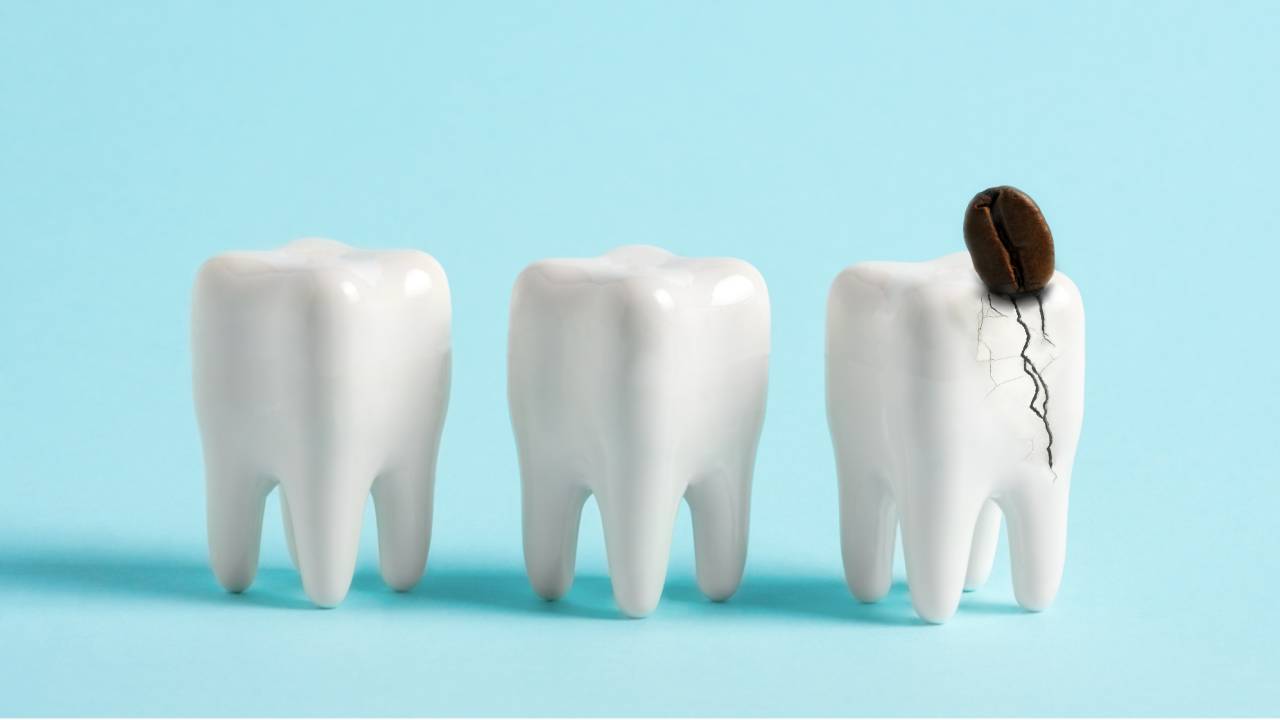
Craze lines are hairline cracks confined entirely to the surface enamel. The AAE notes they are extremely common in adult teeth and cause no structural compromise and typically no symptoms. These are the one category where no treatment is required. The catch is that “craze line” is a clinical diagnosis, not a self-diagnosis. A crack that looks superficial from the outside can extend deeper than it appears, and only a professional evaluation with the right tools can confirm it goes no further.
Fractured Cusp
A fractured cusp occurs when a piece of the tooth breaks away, most often around an existing filling where the remaining tooth structure is thinner. Symptoms include pressure sensitivity and a sharp edge you can feel with your tongue. Crucially, the pulp (the nerve and blood supply at the tooth’s core) is usually unaffected, which makes treatment at this stage faster and more predictable. A crown placed over the remaining structure is typically all that is needed.
Cracked Tooth Extending into Dentin
This is cracked tooth syndrome in its classic presentation. A 2019 study in the Journal of Endodontics noted that cracked tooth syndrome is frequently misdiagnosed or goes untreated for months because the pain pattern is inconsistent. Pain on biting that releases when pressure is removed, temperature sensitivity that fades quickly, and discomfort that varies day to day all create the false impression that the tooth is improving. It is not. The variation reflects the crack’s position and the direction of biting force, not the tooth’s condition.
If your pain releases when you stop biting rather than when you bite down, that specific pattern is diagnostically meaningful. Get evaluated now rather than waiting for it to worsen.
Split Tooth
A split tooth is the end stage of an untreated cracked tooth. The crack has traveled fully through the tooth, creating two distinct segments. At this point the tooth is rarely saveable in its entirety, and often not saveable at all. This outcome is not inevitable. It is the result of a crack that was present earlier and was not treated. Understanding what to do if a tooth cracks before you can get to a dentist can limit the damage in the intervening hours.
Vertical Root Fracture
Vertical root fractures originate in the root rather than the crown, which makes them the hardest category to detect. They often produce minimal symptoms until they are advanced, and they are frequently invisible on standard X-rays. By the time they cause noticeable pain or swelling, the surrounding bone has often been affected. These fractures most commonly lead to extraction because the structural compromise starts where treatment options are most limited.
What Actually Happens When You Wait
A 2020 clinical outcomes study published in the Journal of Endodontics followed patients with symptomatic cracked teeth and found that pulp necrosis (death of the nerve tissue) occurred in a significant proportion of untreated cases, with the timeline measured in months rather than years. The progression follows a consistent pattern: the crack deepens, bacteria enter, the pulp becomes inflamed, and that inflammation either resolves into necrosis or develops into active infection.
Once the pulp is involved, a crown alone is no longer sufficient. Root canal therapy becomes necessary before any restoration can be placed. Once a crack extends below the bone level or splits the root, extraction becomes the only remaining option. Understanding how long you can realistically wait with a toothache puts this timeline in sharper perspective: the window for conservative treatment closes faster than most people expect.
If you have been monitoring tooth pain for a few weeks hoping it will resolve, that window is narrowing.
How Dentists Actually Diagnose a Crack
Standard dental X-rays are largely ineffective at detecting tooth cracks. X-rays reveal changes in density, and a crack is a void, not a density change. A hairline crack running vertically through a tooth is essentially invisible on a two-dimensional film.
Clinicians use several tools that X-rays cannot replace. The bite stick test isolates which cusp is symptomatic by having you bite on a small instrument, reproducing the pain and localizing the source. Transillumination shines a focused light through the tooth to reveal fracture lines that scatter the beam. For complex cases, cone beam computed tomography (CBCT) provides a three-dimensional view that can confirm crack location and extent. A 2021 study in the International Journal of Environmental Research and Public Health confirmed CBCT’s superior sensitivity for detecting vertical root fractures compared to conventional radiography.
If a general dentist cannot locate a crack but your symptoms fit the pattern, an endodontist has access to this full diagnostic toolkit. Asking for that referral is appropriate and practical.
Treatment Options That Can Actually Save the Tooth
Most cracked teeth, caught before the pulp is involved, are entirely treatable. That is the genuinely good news here.
Dental Bonding or a Crown
For cracks confined to enamel or dentin that have not reached the pulp, a crown is the standard and highly effective solution. A crown encircles the tooth completely, holding it together and preventing the crack from propagating further under biting forces. A study in the Journal of Prosthetic Dentistry found survival rates for crowned cracked teeth exceeding 85% at five years when placed before pulp involvement. A crown placed at this stage is faster to complete, less expensive, and produces a better long-term outcome than any treatment required after pulp involvement occurs.
Root Canal Therapy
When a crack has reached the pulp, root canal therapy removes the inflamed or infected tissue, cleans the canal system, and seals the tooth so a crown can protect it. The persistent belief that root canals are painful is not supported by evidence. An AAE patient survey found that patients who had undergone root canal treatment were six times more likely to describe it as painless than patients who had not yet had the procedure. The discomfort people associate with root canals is the infection itself, not the treatment.
A root canal saves the tooth. Avoiding one loses it. Recognizing the signs that point toward needing a root canal earlier rather than later is the clearest path to keeping more of your natural dentition.
When Extraction Is the Only Option
Some cracks leave no path to preservation. Vertical root fractures, fully split teeth, and cracks that extend below the crestal bone all meet that threshold. Extraction in these cases is not a failure of care but the appropriate end point of a crack that progressed past the point of repair.
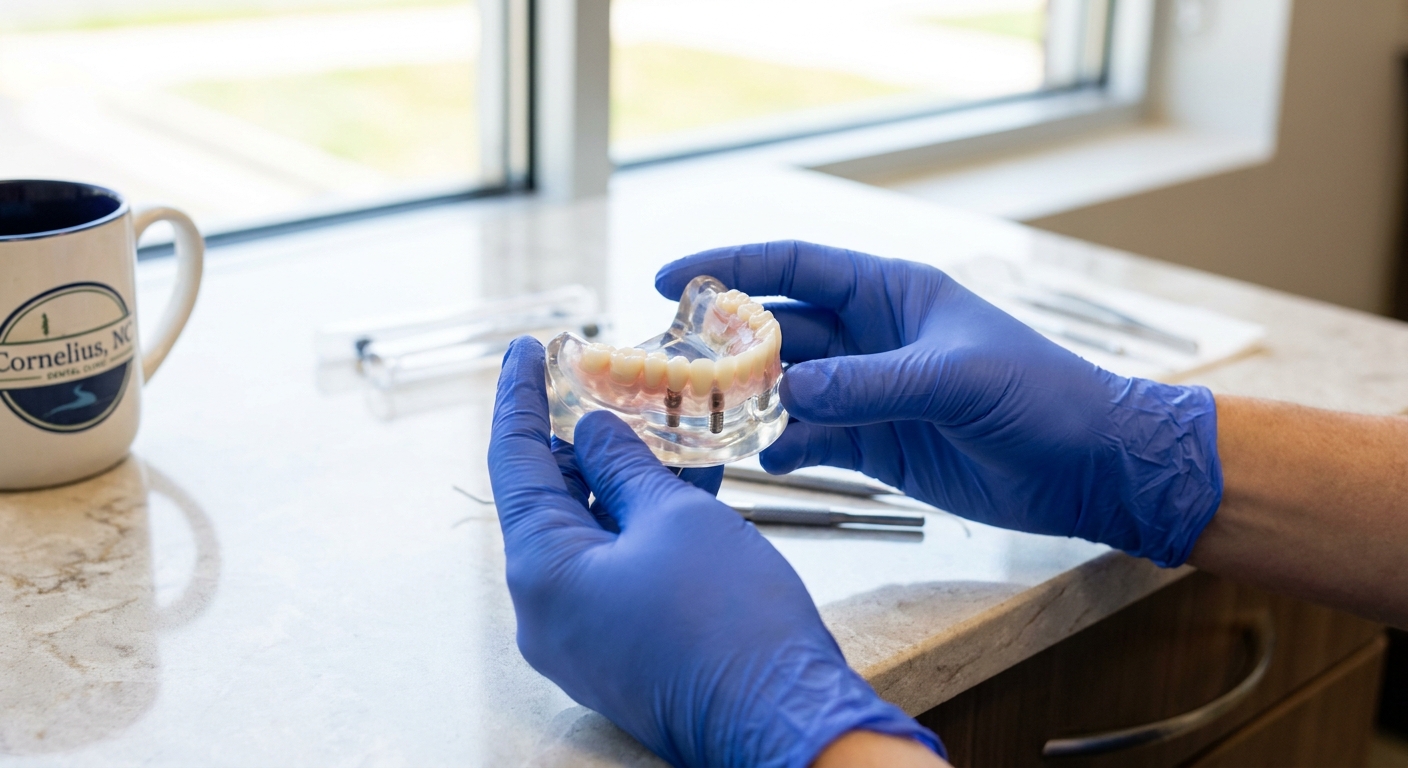
Extraction followed by a dental implant is a functional, durable solution. Before accepting any recommendation for extraction, ask specifically whether the fracture extends below the bone line, since in borderline cases a crown-lengthening procedure occasionally changes what is possible. If tooth loss does occur, understanding the real consequences of leaving a gap untreated matters for the long-term health of adjacent teeth and your bite.
Symptoms That Mean You Need an Appointment This Week
The AAE identifies several symptoms as clear indicators that professional evaluation should not wait. Pain on biting that releases when you open, spontaneous pain at night without any biting stimulus, temperature sensitivity that lingers for more than a few seconds after the source is removed, and visible swelling along the gumline near the tooth all point to pulp involvement or active infection.
Any one of these symptoms indicates that the crack has likely progressed beyond the enamel. Recognizing when an infection has moved beyond the tooth itself is important context here, since untreated pulp infections do not stay localized. Call a dentist the same day any of these symptoms appear, not at your next scheduled cleaning.
What to Do This Week
If you have any tooth sensitivity, pain when biting, or a visible crack, schedule a diagnostic exam this week. Not next month. The goal of that appointment is not necessarily treatment on the same day but a professional assessment of what type of crack is present, how far it extends, and what your options are while they still include preservation.
Look for a general dentist with CBCT imaging capability or ask for an endodontist referral if your symptoms are pronounced or your regular dentist has not been able to identify the source. The cost of a diagnostic exam is always smaller than the cost of a root canal, and the cost of a root canal is always smaller than the cost of extraction plus implant. The trajectory is linear, and it only moves in one direction without treatment.